
Some links below are affiliate links, that help keep this site running at no extra cost to you. Learn more here.
You don’t need to walk the full Camino to feel the magic of Santiago de Compostela – though I’d argue you do need more than just a quick cathedral selfie!
Santiago de Compostela’s old town reveals itself slowly, layer by layer, through worn granite streets that have welcomed pilgrims for over a thousand years. This guide covers the best of the old town – from the three cathedral squares and the brilliant covered market, to the quieter streets and evening spots that most visitors miss entirely.
You can book walking tours in Santiago de Compostela’s old town with an English speaking guide, from €12
per person here:
The Cathedral & Its Three Magnificent Squares
Praza do Obradoiro: The Grand Arrival
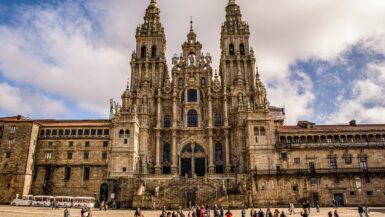
Every journey through Santiago’s old town should start here, at the most famous square in Galicia. The Santiago de Compostela Cathedral dominates the eastern side with its towering Baroque façade, but take time to appreciate the architectural conversation happening around you.
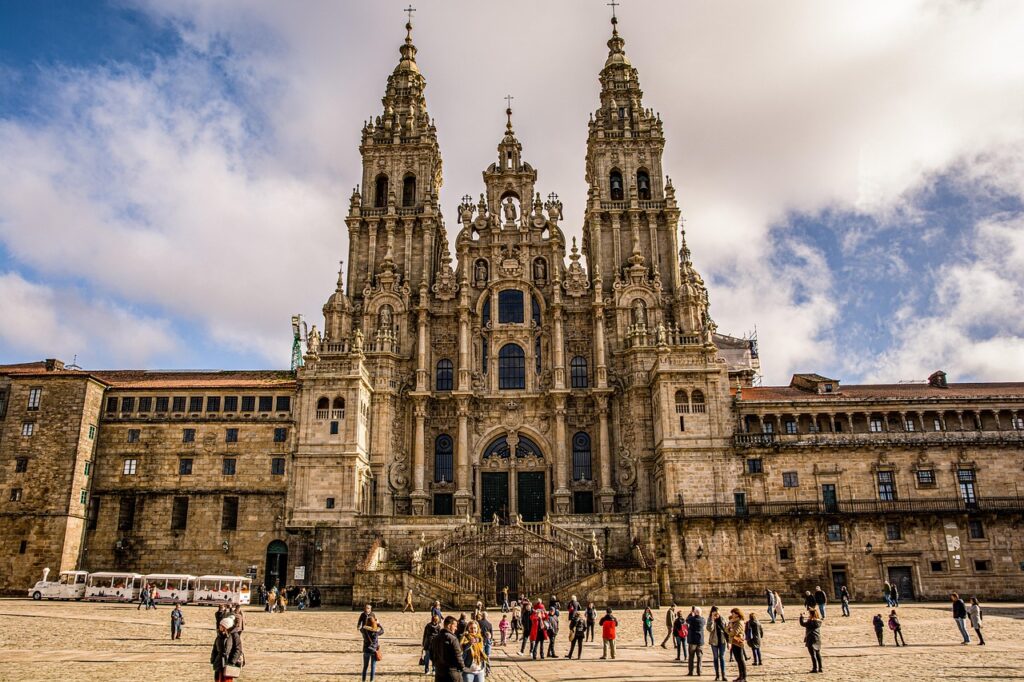
The Hostal dos Reis Católicos on your left was built as a pilgrims’ hospital in 1499 – now it’s one of Spain’s most luxurious paradors, but you can still peek into its stunning courtyards. The neoclassical Rajoy Palace faces the cathedral, while the Gothic Colegio de San Jerónimo completes this incredible architectural ensemble.
Pro tip: Visit early morning (before 9am) or late afternoon to avoid cruise ship crowds. The granite stones catch the light beautifully just after sunrise, and you’ll hear the cathedral bells properly without competing with tour groups.
Praza das Praterías: The Silversmiths’ Square
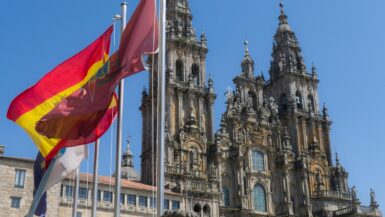
Walk around the cathedral’s south side to discover this more intimate square, named after the silversmiths who once worked here. The cathedral’s Romanesque façade here is completely different from the Baroque front – older, more weathered, with intricate stone carvings that reward close inspection.
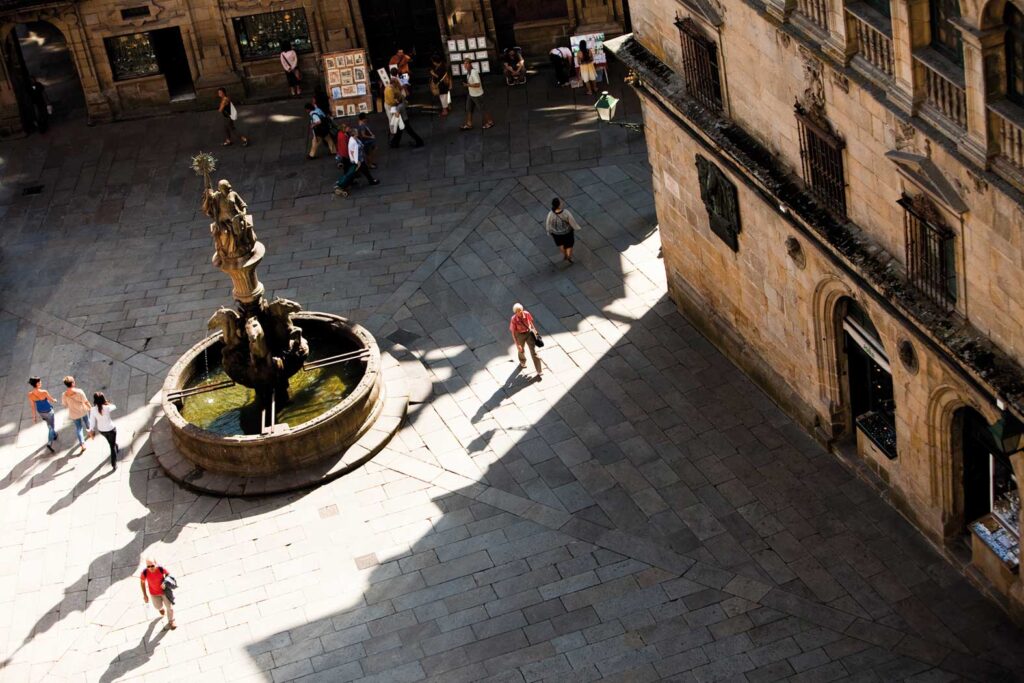
Look for the famous sculpture of King David playing his harp above the door – the detail is extraordinary when you consider it was carved nearly 900 years ago. The Casa do Cabildo opposite creates a perfect frame for photography, especially in late afternoon when the western light hits the stone.
Praza da Quintana: The Secret Square
This is my favourite of the three main cathedral squares, partly because many visitors miss it entirely. Split into upper and lower levels (Quintana de Vivos and Quintana de Mortos), it has a completely different atmosphere – more mysterious, more contemplative.
The cathedral’s eastern façade here shows the building’s oldest parts, and you can often spot pilgrims touching the stone at the base, following traditions that stretch back centuries. The Casa da Parra restaurant terrace offers perfect people-watching if you need a coffee break.
Professional Guided Tours
If you want to understand the deeper history and hidden stories behind these ancient stones, a local guide makes an enormous difference. The details they point out – from medieval guild marks to Civil War bullet holes – transform a simple walk into a proper journey through time.
Book your Santiago de Compostela private tour from €145 per person
This 3-hour walking tour covers all the essential sights while revealing the stories that most visitors never hear. Your local guide will show you the best photography spots, recommend authentic restaurants, and adapt the route to your interests – whether that’s architecture, history, or Camino traditions.
What’s included:
- Professional local guide for 3 hours
- Personalised itinerary based on your interests
- Inside tips on local restaurants and hidden spots
- Photography recommendations and assistance
- Flexible route through the historic centre
Wandering the Ancient Streets
Rúa do Franco: The Pilgrim’s Highway
This pedestrianised street connecting the old town to the cathedral buzzes with energy from morning until late. It’s lined with traditional restaurants, many displaying octopus and other Galician specialities in their windows. The buildings lean slightly inward, creating that medieval feeling of the street embracing you as you walk.
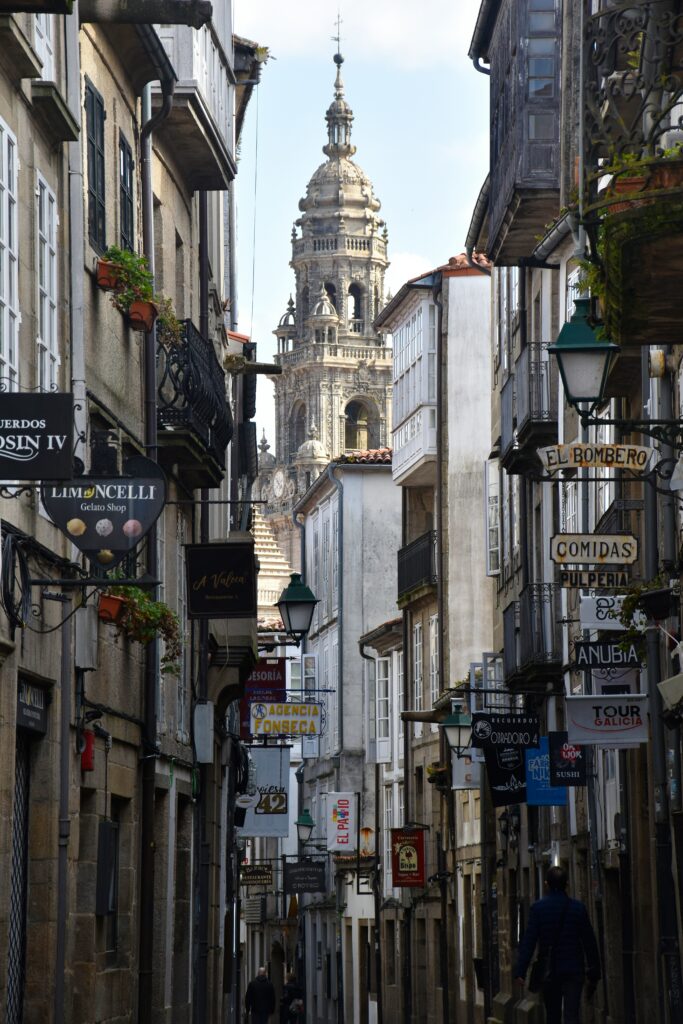
Stop to admire the details: carved stone lintels above doorways, wrought-iron balconies heavy with flowers, and the way the granite pavement has been worn smooth by millions of footsteps. There’s a reason pilgrims have walked this exact route for centuries.
Rúa das Hortas
Turn off the main tourist routes onto this quieter street and you’ll discover a different Santiago entirely. Students live in ancient buildings here, hanging laundry from medieval windows, and you’ll often catch glimpses of hidden courtyards through half-open doors.
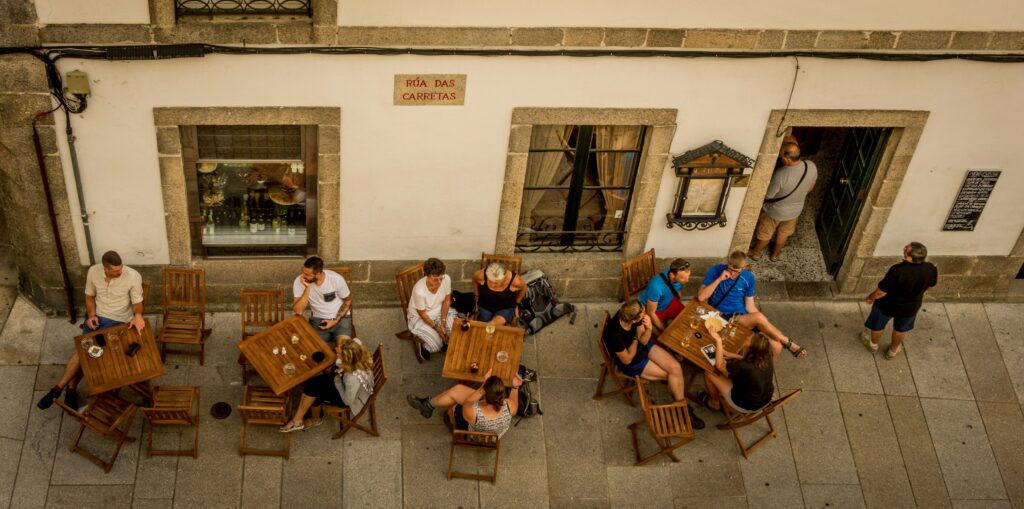
The contrast is brilliant – 12th-century stone archways leading to university departments, traditional tabernas next to trendy coffee shops. This is where you realise Santiago isn’t just a museum; it’s a living city.
Praza da Inmaculada
This peaceful square behind the cathedral feels completely different from the pilgrimage routes. The monastery of San Martín Pinario dominates one side – its façade is so elaborate it almost competes with the cathedral itself. Students from the nearby university use this square as an outdoor study hall, creating a wonderful atmosphere of academic contemplation.
Look for the small garden entrances around the square’s edges – some are open to the public and offer surprising green spaces hidden within the medieval city walls.
Santiago de Compostela Markets
Mercado de Abastos
If you want to understand Santiago beyond the tourist façade, the covered market is essential. Built in 1941 but feeling much older, it’s where locals shop for their daily needs – and where you’ll find the freshest seafood, local cheeses, and traditional breads.
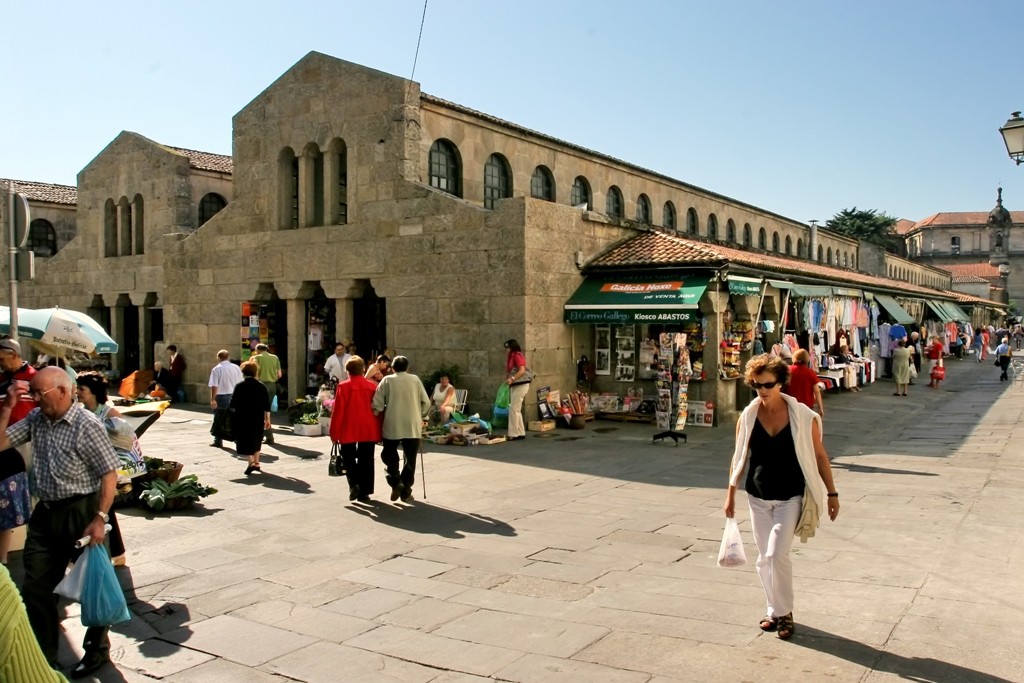
The energy here is infectious. Vendors call out the day’s specials, elderly women inspect vegetables with expert eyes, and the smell of fresh fish mingles with crusty bread. It’s sensory overload in the best possible way.
Market highlights:
- Seafood section: Fresh octopus, percebes (goose barnacles), and whatever came in that morning
- Cheese corner: Try local tetilla cheese and ask for samples
- Traditional breads: Perfect for impromptu picnics in the nearby parks
Market Bars & Quick Bites
Several small bars inside and around the market serve proper local food at local prices. These aren’t tourist traps – they’re where market workers and local shoppers grab a quick bite between errands.
Try the tortilla española at Bar Central inside the market, or pop into Casa Manolo just outside for their famous pulpo á feira (octopus with paprika and olive oil). Both spots close early afternoon, so visit before 3pm.
Hidden Corners & Unexpected Discoveries
Secret Gardens & Quiet Courtyards
Santiago’s old town hides numerous small gardens and courtyards that most visitors never discover. The Parque de Bonaval technically sits just outside the historic walls, but it’s worth the five-minute walk for its terraced gardens and views back over the cathedral spires.
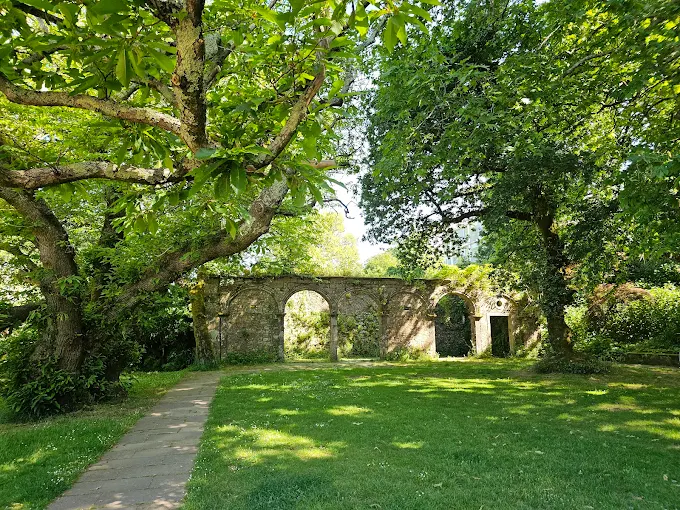
Closer to the centre, keep an eye out for half-open doors leading to monastery courtyards. Many allow quiet visitors to peek inside – the Convent of San Paio de Antealtares often has its gorgeous cloister visible from the entrance.
Quiet Churches & Hidden Chapels
While everyone focuses on the cathedral, Santiago’s old town contains dozens of smaller churches, each with their own character. Santa María Salomé near Rúa do Franco has beautiful Romanesque details, while San Fiz de Solovio is associated with early Christian worship and represents an important part of Santiago’s religious heritage.
These smaller churches often stay open when the cathedral gets crowded, offering peaceful moments for reflection regardless of your religious beliefs.
Viewpoints & Golden Hour Magic
Parque da Alameda
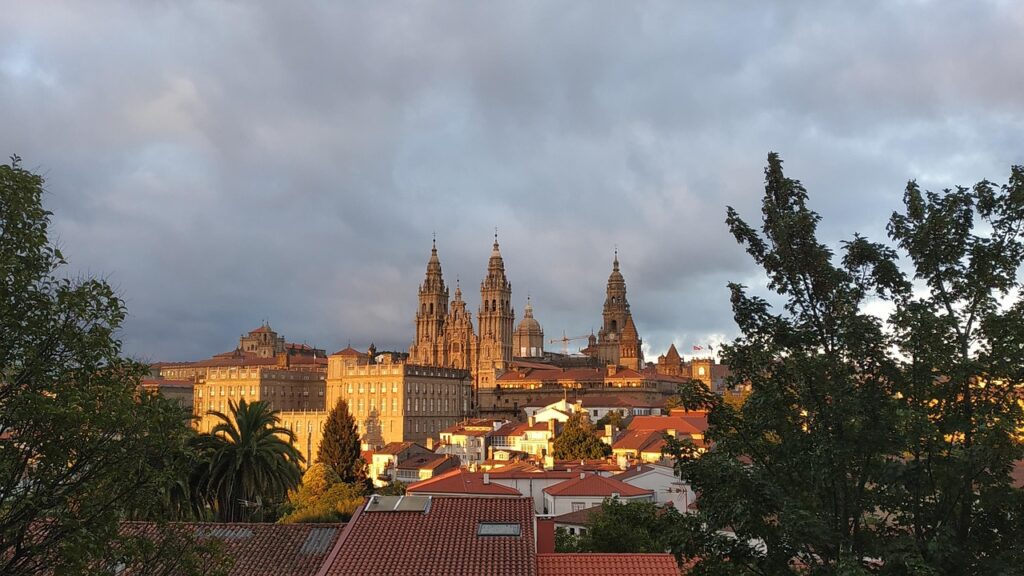
No visit to Santiago de Compostela is complete without seeing the cathedral from this elevated park. The walk takes about 10 minutes from the old town centre, and the payoff is spectacular – the twin spires of the cathedral rising above the red-tiled roofs, with the Galician countryside rolling away beyond.
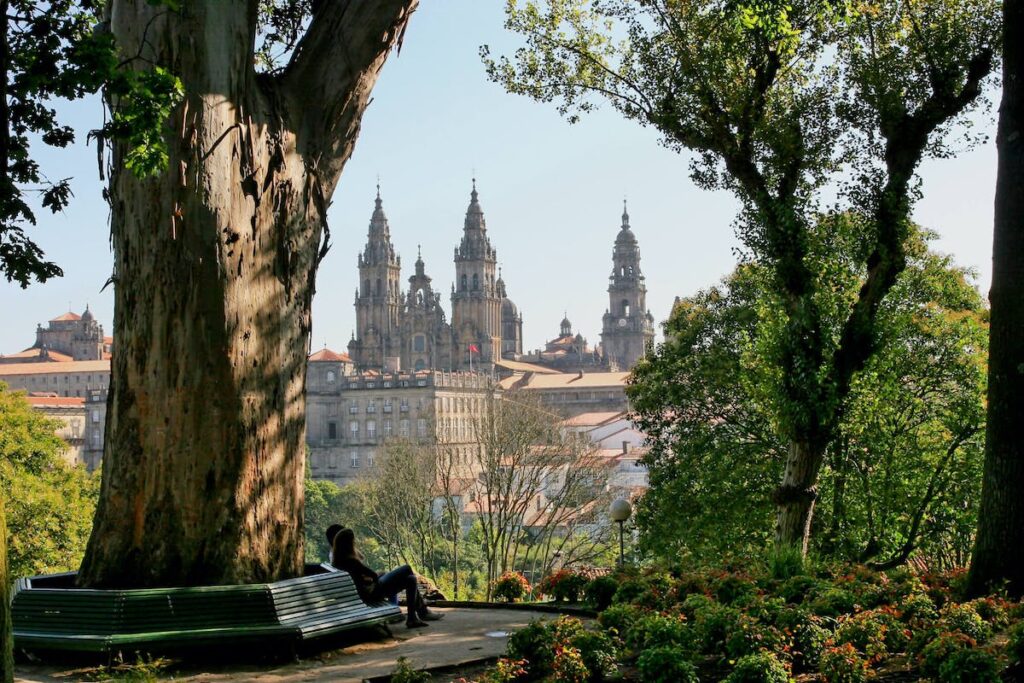
The park itself is lovely for wandering, with tree-lined paths, a small pond, and several cafés if you need refreshment. Late afternoon light here is magical – the granite stones of the old town seem to glow.
Higher Viewpoints for Photography
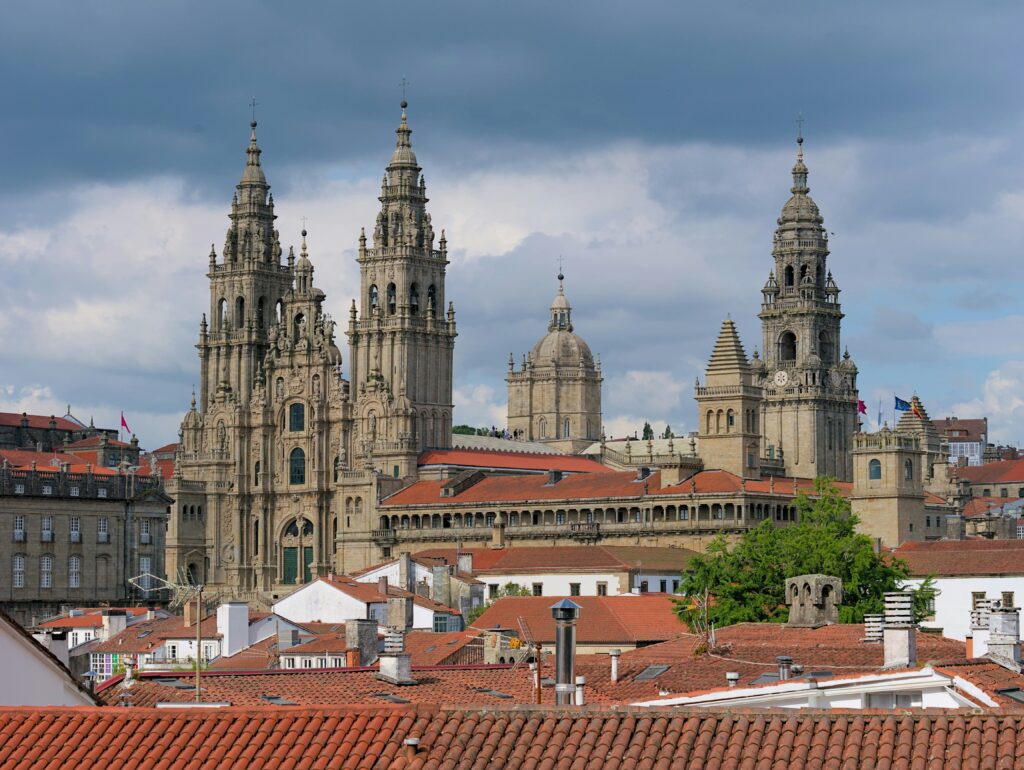
If you have energy for a longer walk, Monte Pedroso offers the ultimate panoramic view of Santiago. It’s about a 30-minute walk from the old town, but you’ll see the entire city laid out below you, with the cathedral as the obvious focal point of this ancient urban landscape.
Evening Atmosphere
Santiago’s old town completely changes character as evening approaches. The daytime pilgrimage crowds disperse, locals emerge for their evening paseo, and the granite streets take on a golden warmth from the street lighting.
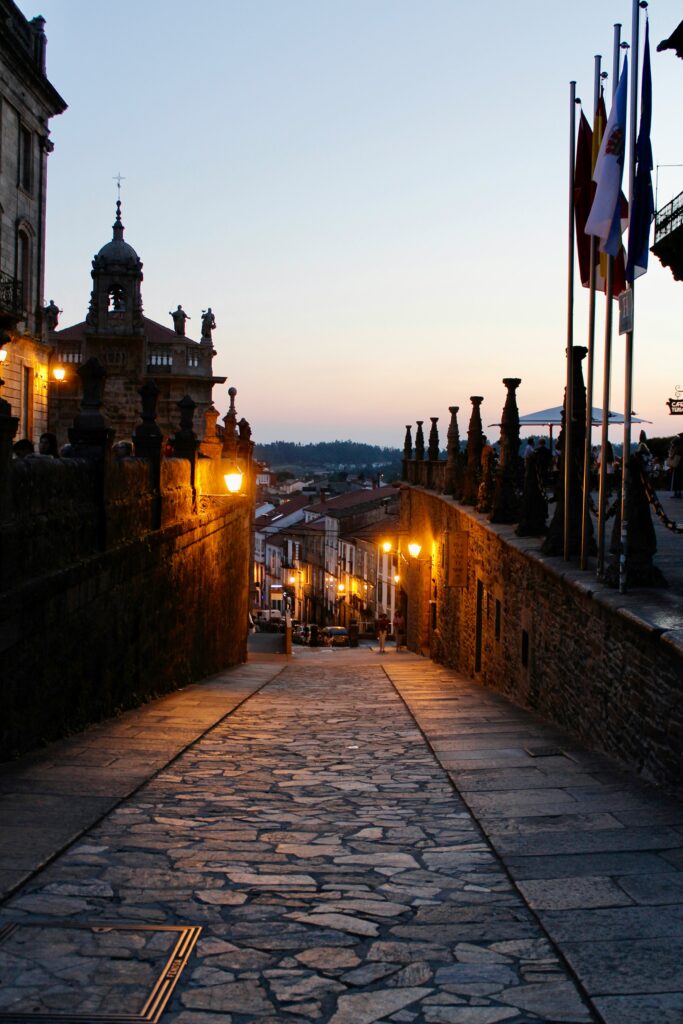
Students fill the small bars around the university quarter, creating a lively but intimate atmosphere. Unlike tourist-heavy cities where evening entertainment feels forced, Santiago’s nightlife grows organically from its role as a living university city.
Authentic Tapas Crawling
The streets radiating from the cathedral offer some brilliant small bars for traditional Galician tapas. A Taberna do Bispo serves excellent local wines with simple but perfect accompaniments – local cheese, olives, and whatever seafood arrived fresh that day.
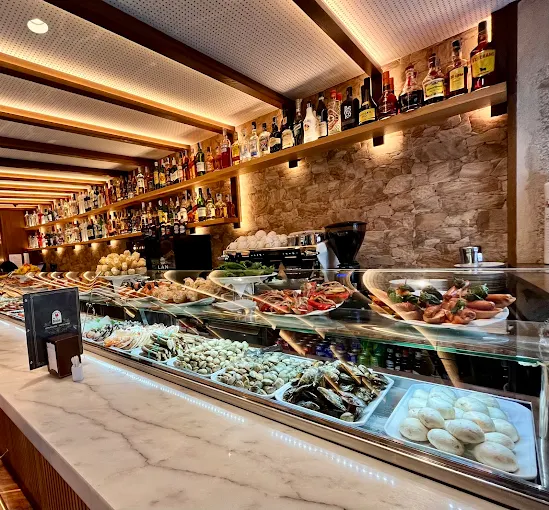
For something with more character, seek out Abastos 2.0 near the market – it’s where young chefs experiment with traditional Galician ingredients in a space that feels more like someone’s creative kitchen than a formal restaurant.
Essential evening foods to try:
- Pulpo á feira: Octopus with paprika, the Galician signature dish
- Pimientos de Padrón: Small green peppers, some spicy, some not – it’s a gamble with every bite
- Empanada gallega: Flaky pastry filled with tuna, cod, or meat
- Tetilla cheese: Local cow’s milk cheese with a distinctive shape
- Ribeiro wine: Light, crisp white wine perfect with seafood