
Some links below are affiliate links, that help keep this site running at no extra cost to you. Learn more here.
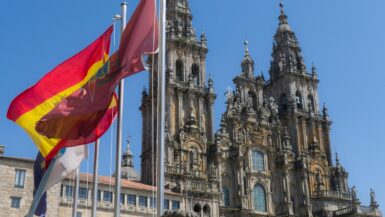
The Santiago de Compostela cathedral is the main reason most people make the trip to the city – it’s the end point of the Camino de Santiago pilgrimage route, and supposedly contains the remains of Saint James the Apostle himself.
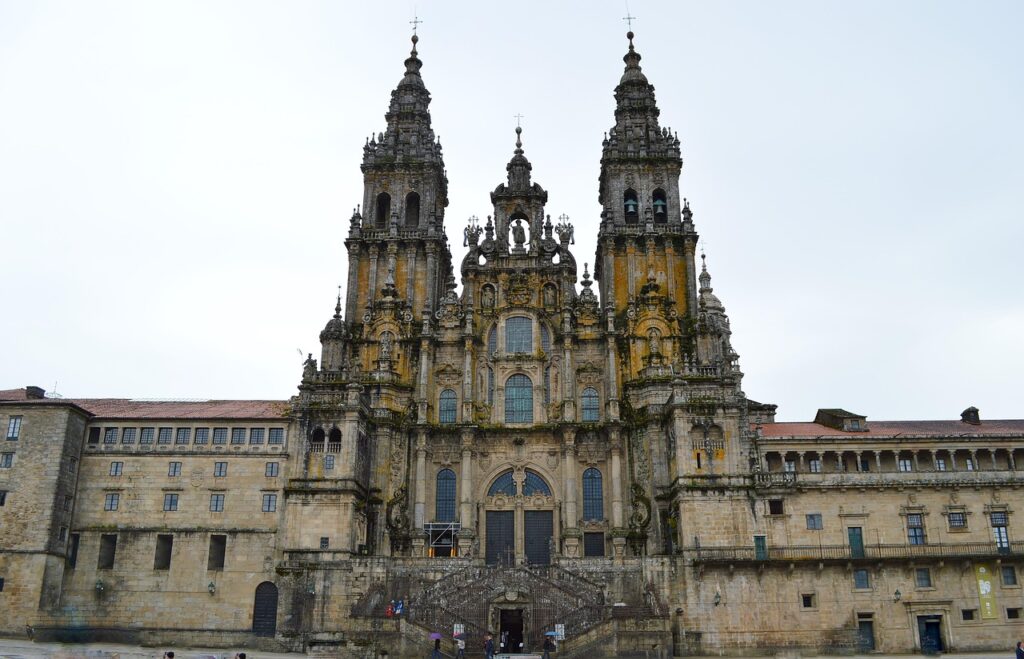
The cathedral is massive, stunning, and can be quite overwhelming if you turn up without any idea what you’re looking at. I’ve put together everything you need to know about visiting, including the best tours, what you’ll actually see inside, and how to avoid the worst queues.
About the cathedral
The cathedral supposedly contains the tomb of Saint James the Apostle, which is why millions of pilgrims have walked here over the centuries. According to tradition, his body was brought to Galicia by boat after he was martyred in Jerusalem around 43 AD. The tomb was lost until around 820 AD when a hermit spotted strange lights in a forest – the discovery led to the construction of the first church on this site.
The current building started going up in 1075. What you see now is mostly Romanesque from that period, with Gothic bits added later, and then the famous Baroque façade slapped on the front in the 18th century. It’s like looking at different centuries of Spanish architecture layered on top of each other.
Booking tickets and tours
The cathedral itself is free to enter, but there are queues – sometimes quite long ones during summer. If you want to visit the museum or go up to the rooftops, you’ll need to book tickets.
If you’d rather visit independently without a tour, you can just turn up and queue. The cathedral is free, but museum entry costs extra. You’ll miss the explanations though, which does make quite a difference when you’re looking at 12th-century Romanesque sculpture.
You can find information about paid tours below and what to expect.
Cathedral and museum, and old town guided tour
This is the more popular English-speaking tour option for the cathedral. Three and a half hours covering the main areas inside the cathedral, museum as well as a walking tour of the old town, with official English guides.
You’ll start at the museum (meeting point is Praza do Obradoiro, s/n) where you’ll see the history laid out properly before heading into the cathedral itself. Makes more sense doing it this way round – you’ll understand what you’re looking at when you get inside.
The tour includes the tomb of Saint James in the crypt, the Pórtico de la Gloria (the famous Romanesque entrance), the main altar, various chapels, the Codex Calixtinus manuscript, the Treasury, and the cloister. You’ll also see where the Botafumeiro is kept when it’s not being swung from the ceiling.
Recent visitors mention the guides by name (Carmen comes up a lot in reviews) as being genuinely good at explaining things without making it feel like a lecture.
The rooftop tour
This is the more unusual option. You’ll spend the first part in the museum learning about the cathedral’s history, then head up 150 steps to the roof itself.
Once you’re up there, you can see how the cathedral was built and modified over different centuries – the Romanesque base, Gothic additions, Baroque towers. The views across Santiago’s old town are excellent, with terracotta rooftops stretching out in all directions.
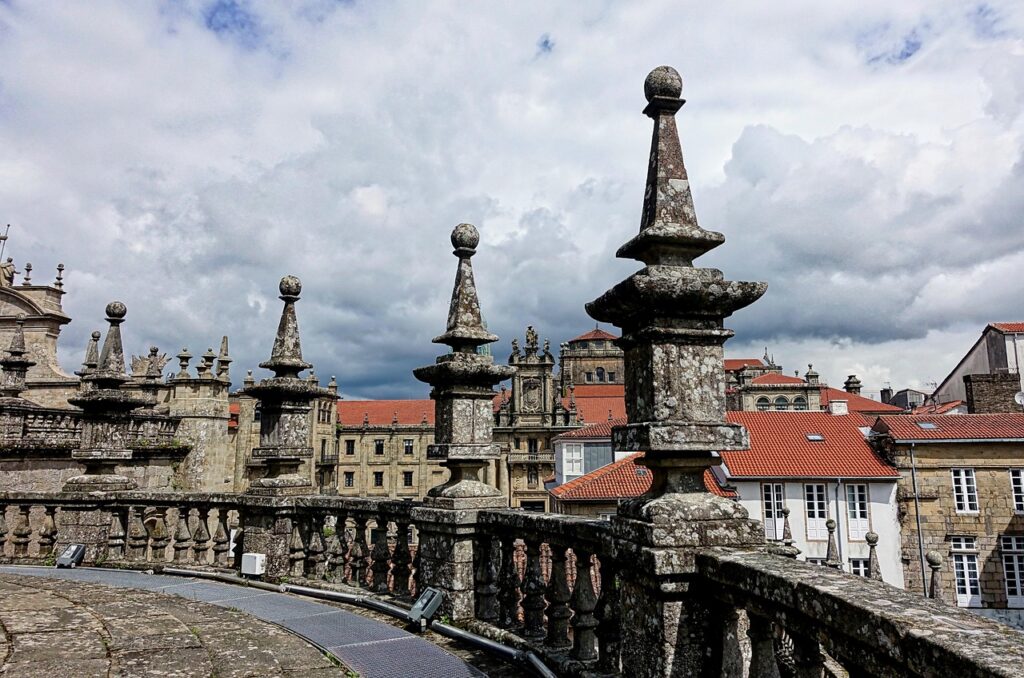
The Carraca Tower section takes you up one of the two main bell towers on the Obradoiro façade. It’s quite high, and you get a different perspective on the city from up here compared to the main roof.
Tours are Spanish only at the moment, which limits who this works for, but if you speak even basic Spanish or just want the views, it’s worth considering.
The Botafumeiro
This giant incense burner is one of the cathedral’s most famous features. It weighs 80kg, measures 1.6 metres tall, and during certain celebrations, eight men in red robes swing it on ropes until it’s flying through the transept at 80 km/h, nearly touching the ceiling.
The tradition supposedly started because medieval pilgrims arrived at the cathedral after weeks of walking and smelled absolutely dreadful, so the incense helped mask it. These days it’s more ceremonial.
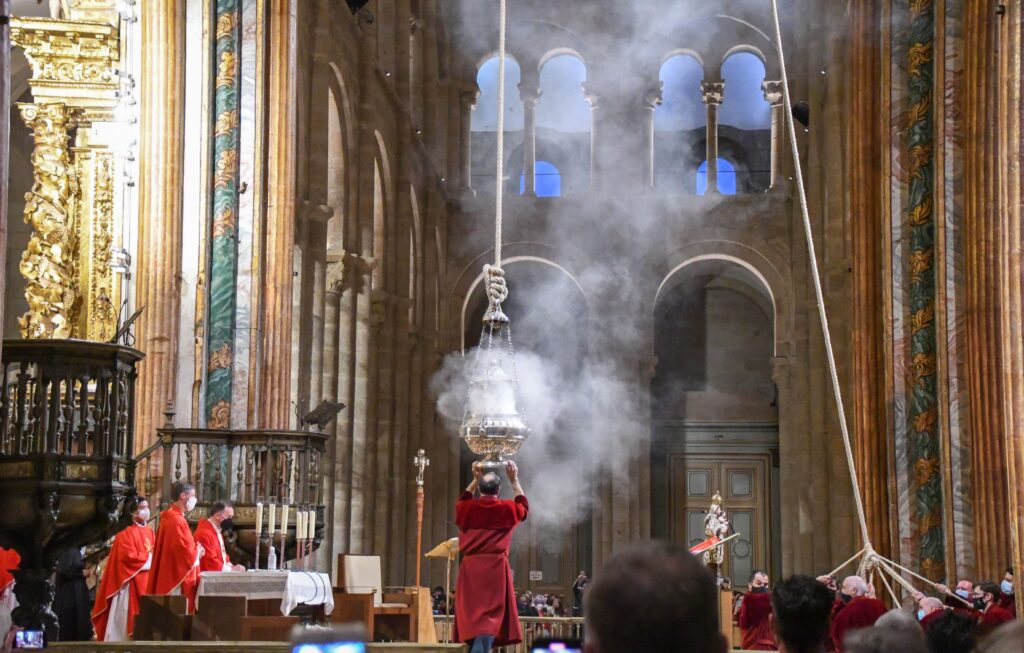
You’ll only see it in action during major religious holidays and Jubilee Years (when Saint James’s Day falls on a Sunday). The next Jubilee Year is 2027. If you’re visiting at other times, you’ll see it on display in the library instead.
Private tour option
If you’d rather have a guide to yourself without joining a group, there are private tour options available. These cost more but give you flexibility on timing and let you ask as many questions as you want without holding up other people.
This covers the historic centre without going inside the cathedral. You’ll see the main squares, important buildings, and your guide will explain the university area and medieval streets. Good if you want the city context first or aren’t particularly interested in spending ages inside the cathedral itself.
Private tours make sense for couples or small groups who want to go at their own pace, or if you have specific questions about aspects of the cathedral or city history. The per-person price drops if you’re booking for more people, though exact pricing depends on group size.
These need booking ahead like the group tours. During busy periods (summer, Jacobean Holy Years), private guides get booked up weeks in advance.
What’s inside
Pórtico de la Gloria
This Romanesque entrance from 1188 is hidden behind the Baroque façade now, but it’s considered one of the finest examples of medieval sculpture in Europe. Master Mateo carved the whole thing, with Saint James on the central column and Christ in Majesty above surrounded by the Evangelists and the 24 Elders of the Apocalypse.
There used to be a tradition where pilgrims would place their hand on the column and touch their head to it, but access is restricted now because it was causing damage.
The crypt
Below the main altar is where the alleged relics of Saint James are kept in a silver reliquary from 1886. Pope Leo XIII authenticated them in 1884, though historians still debate whether they’re genuinely the apostle’s remains.
The crypt shows the foundations of the 9th-century church – this is what medieval pilgrims walked hundreds of miles to see.
Main altar
The enormous Baroque baldachin above the altar showcases a 13th-century statue of Saint James. There’s a staircase behind the altar where pilgrims queue to embrace the saint’s mantle – you’ll see a constant line of people waiting their turn.
The nave
The Romanesque nave is 97 metres long with barrel vaults running the length of it. Galleries sit above the side aisles, which were designed to accommodate pilgrims who would sleep in the cathedral overnight during medieval times. These days they just make the interior feel even more spacious.
The exterior
Obradoiro façade (west side)
This is the famous one that appears in every photo of Santiago. Fernando de Casas Novoa designed it, and it was completed in 1740. The name comes from the stonemasons’ workshop that operated in the square during construction.
Saint James stands in the centre dressed as a pilgrim, with his disciples below. The star and urn reference the discovery of his tomb. This façade appears on Spanish 1, 2, and 5 cent euro coins.
Behind this Baroque front, the original Romanesque entrance (Pórtico de la Gloria) still exists – they essentially built a new façade to protect it from weather damage.
Praterías façade (south side)
This is the only original Romanesque façade that survived, built between 1103 and 1117. The carvings show Christ being tempted by demons, the Creation of Adam, and King David playing what looks like a medieval fiddle. It’s much older than the flashy western façade and gives you a better sense of what the cathedral originally looked like.
Quintana façade (east side)
Two doors here: the Porta Real (where Spanish kings entered) and the Porta Santa (Holy Door). The Holy Door only opens during Jacobean Holy Years – years when Saint James’s Day (25 July) falls on a Sunday. The next one is 2027.
If you visit during a Holy Year and walk through the Porta Santa, you can receive a plenary indulgence according to Catholic tradition. Even if that doesn’t mean anything to you, the door itself is quite impressive with figures of prophets and apostles around it.
The bell towers
The two main towers on the Obradoiro façade reach about 75-80 metres high. The right-hand one (Torre das Campás) houses thirteen bells, including two donated by King Louis XI of France in 1483. The left-hand one (Torre da Carraca) is the one you climb on the rooftop tour.
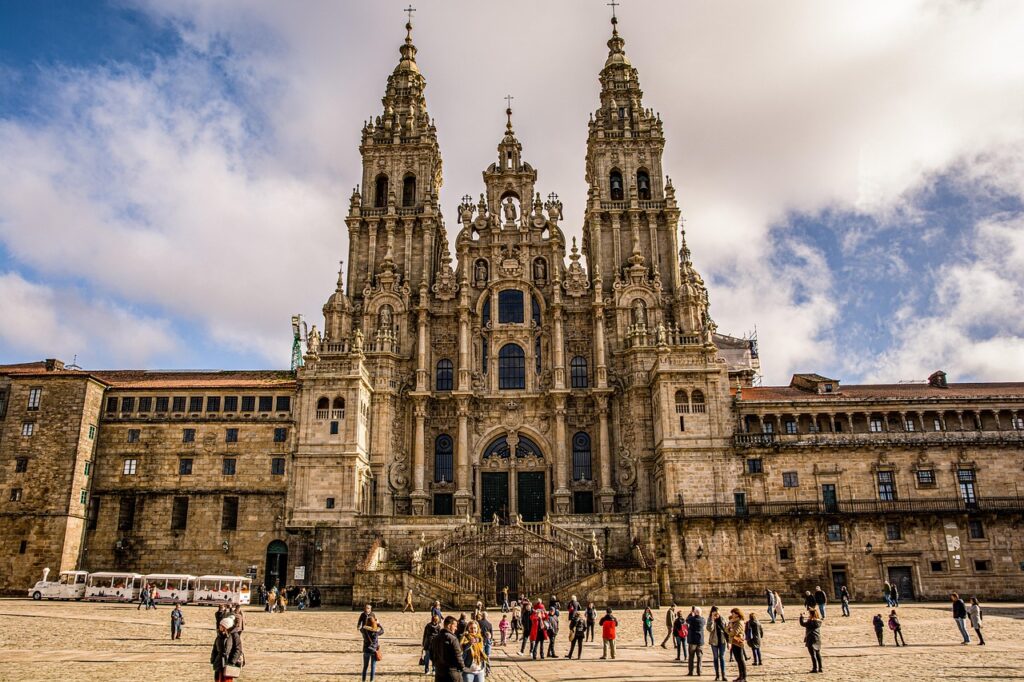
Both towers had to be reinforced with buttresses in the 17th century after they started tilting – you can still see the buttresses if you look closely.
The Clock Tower (also called Berenguela) sits at a different corner where two squares meet. It has a huge bell called Berenguela that weighs about 9,600kg. During Jacobean Holy Years, a lantern on top of this tower stays lit all year as a beacon for pilgrims.
Getting there
The cathedral is in the old town centre. If you’re arriving by bus or train station, it’s about 15-20 minutes on foot to Praza do Obradoiro. Taxis can drop you nearby but the old town streets are narrow and mostly pedestrianised.
Santiago de Compostela Airport is about 15km away with regular buses into the centre.
When to visit
July and August are rammed because of Saint James’s Day on July 25th. Hotels get expensive, queues are long, and the city fills up with pilgrims finishing the Camino. The atmosphere is good though, and you’re more likely to see the Botafumeiro.
May, June, and September offer decent weather (usually 20-25°C) with fewer crowds. Winter is quieter but quite wet – Galicia gets a lot of rain, which is why everything’s so green.
If you’re planning to walk the Camino de Santiago, timing it to finish during a Jubilee Year (2027, 2032, 2038) makes it more special, though you’ll be dealing with much larger crowds.
Tours vs independent visits
The guided tours cost more but you skip queues and actually understand what you’re looking at. The guides are good at explaining why certain things matter without making it boring.
Independent visits are free (for the cathedral itself) and let you go at your own pace, but you’ll miss a lot of context. The Pórtico de la Gloria carvings are incredible, but unless you know the biblical references and understand the iconography, they’re just old sculptures.
If you’re only visiting once, I’d book one of the tours. If you’ve got multiple days in Santiago and want to go back for a second look, then an independent visit makes sense.
Is it worth visting?
The cathedral is impressive, and if you’re in Santiago you’ll end up visiting anyway – it dominates the old town. The question is more whether to book a tour or just turn up.
Tours make more sense for most people. You get explanations, skip queues, and see areas (like the rooftops) that aren’t accessible otherwise. The standard 2-hour tour at €25 is reasonably priced for what you get.
The rooftop tour is more niche – if you want those views and can handle the climbing, it’s worth the extra money. If you’d rather stay on ground level or Spanish-only tours don’t work for you, stick with the standard option.
Just book ahead if you’re visiting during summer. Tours sell out, queues get long, and turning up without a plan means wasting time standing around when you could be inside looking at 12th-century sculpture.