

Madrid’s location in the heart of Spain makes it absolutely brilliant for day trips. Within an hour or two, you can be exploring medieval towns, royal palaces, dramatic landscapes, and some of the country’s most iconic sights.
Whether you fancy stepping back in time in Toledo, marveling at royal grandeur in El Escorial, or photographing windmills at dawn in Consuegra, these day trips from Madrid will give you a completely different side of Spain beyond the capital’s museums and tapas bars.

Activity Finder
Find a perfect experience during your holiday in Spain
Tell me your group and your vibe. I'll suggest experiences that make the most of your time on this holiday.
Toledo: Medieval City on the Tagus
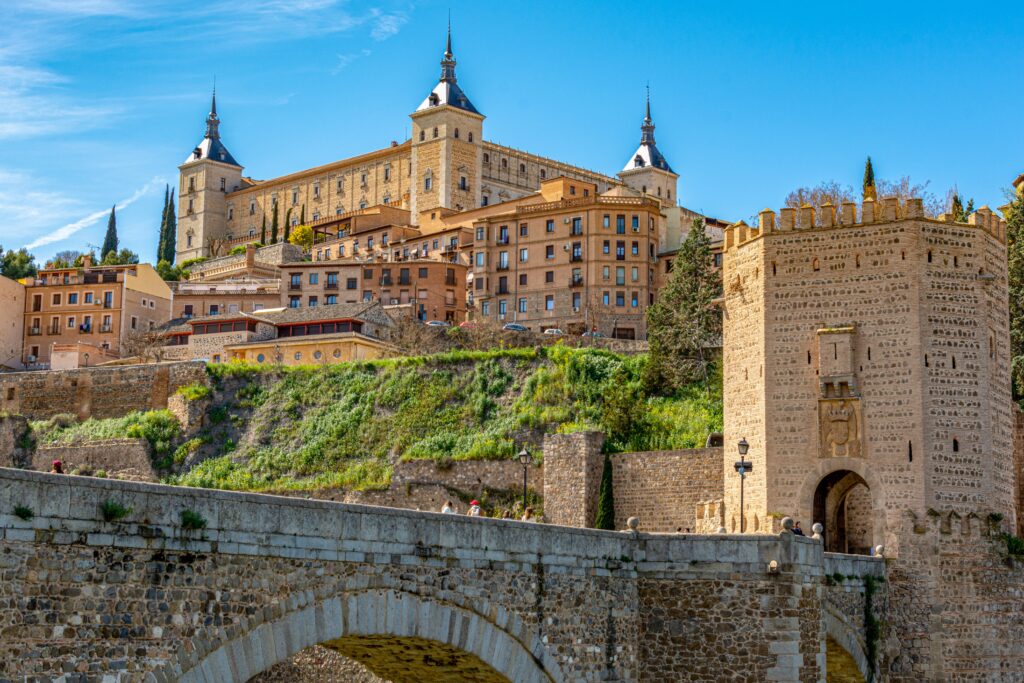
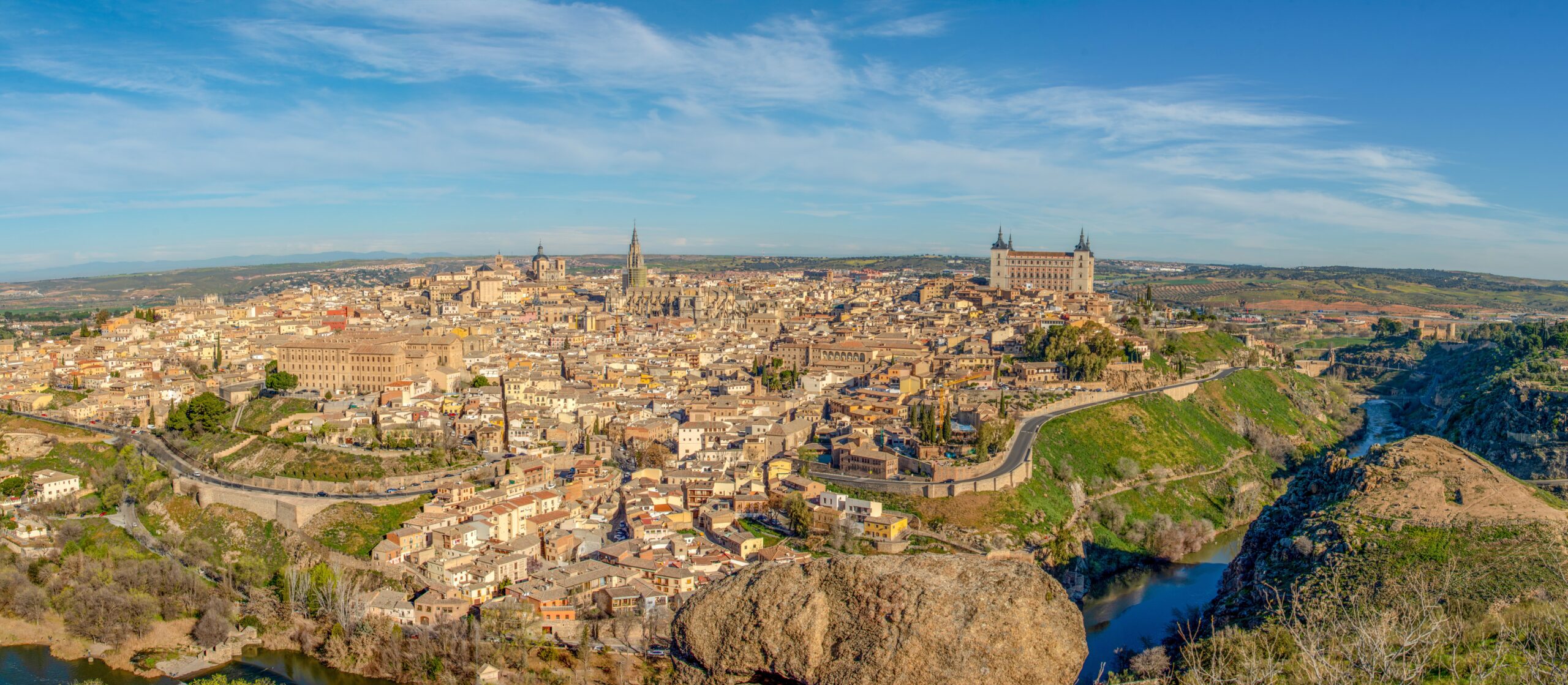
Toledo is absolutely magical – a UNESCO World Heritage city that feels like stepping into a medieval fairy tale. The entire historic centre sits dramatically on a rocky outcrop surrounded by the Tagus River, and it’s one of those places that looks exactly like the postcards.
Getting to Toledo
The high-speed AVE train from Madrid Atocha is hands down the best way to get there. Trains run several times per day, take about 33 minutes, and usually cost around €13–€14 one way, but schedules and prices should be checked on Renfe in advance. You can buy tickets at the station or online through Renfe, though booking ahead isn’t essential except during peak tourist season.
Toledo’s train station is roughly 1.5–2 km from the old town, and while there is local bus service available, fares and specific route details can change, so it’s worth checking current information with the local transport operator when you arrive. Walking takes about 20 minutes and includes some lovely views, but it’s quite uphill.
Toledo Cathedral and Must-See Sights
Toledo Cathedral is absolutely spectacular – one of the finest Gothic buildings in Europe with an interior that’ll leave you speechless. The high altar alone is worth the €12.50 entrance fee, and the Treasury holds works by El Greco, Goya, and Velázquez. The audio guide costs an extra €3 but it’s worth every penny for the historical context.
Activity finder
Find something to do in Madrid
Kayak, boat trips, or a chilled afternoon — pick what fits.
Don’t miss the Synagogue of Santa María la Blanca and the Monastery of San Juan de los Reyes. The Jewish Quarter is fascinating to wander through, and you’ll understand why Toledo was known as the “City of Three Cultures” where Christians, Muslims, and Jews lived together for centuries.
The views from the Mirador del Valle are stunning, especially in late afternoon when the golden stone glows in the sunlight. It’s several kilometers from the city center and is typically reached by car, taxi, tourist bus, or a much longer uphill walk, but the panoramic shots of the entire city are incredible.
El Escorial: Royal Monastery and Mausoleum
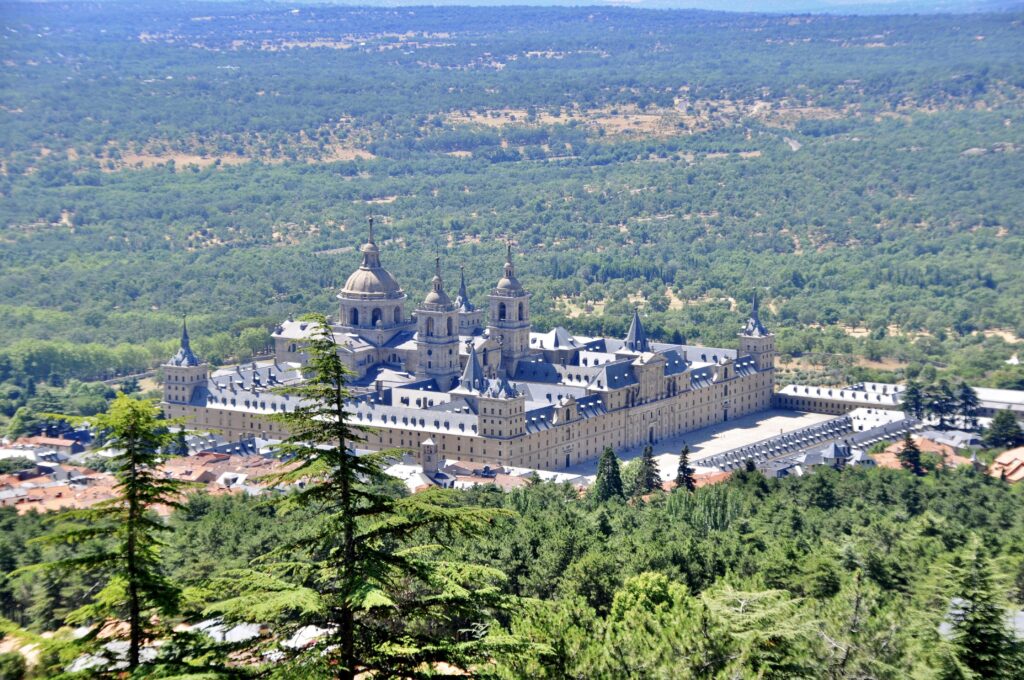
El Escorial is one of those places that shows you just how powerful the Spanish monarchy once was. This enormous monastery-palace complex was built by Philip II as both a royal residence and his father’s mausoleum, and the scale is genuinely impressive.
Getting to El Escorial
Frequent buses (lines 661 and 664) from Madrid’s Intercambiador de Moncloa take about an hour and cost roughly €4–€5 each way, with current fares to be checked. The bus stops right outside the monastery, which is incredibly convenient.
Alternatively, you can take the Cercanías line C3a train from Atocha or Chamartín to El Escorial station, then catch bus L4 or walk 15 minutes to the monastery. The train journey takes about an hour, with a fare of around €4–€5 each way.
Inside the Royal Site
Adult entry is around €10–€15, and visitors should check Patrimonio Nacional for up-to-date combo options and prices. The audio guide is an extra €3 but absolutely essential – this place is packed with history and without context, you’ll miss most of the significance.
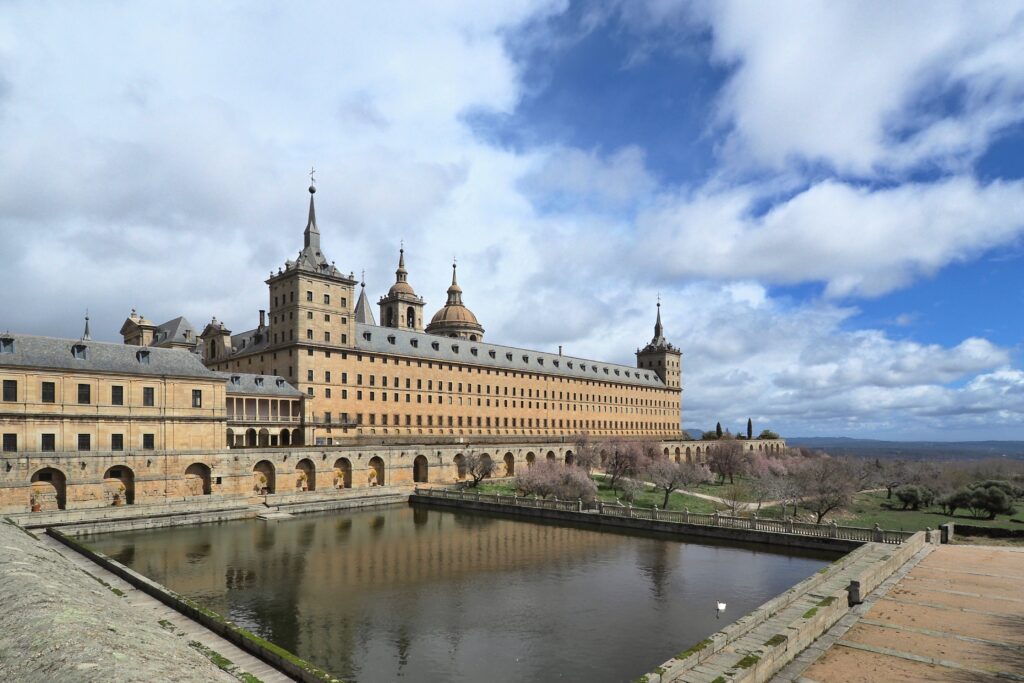
The Royal Pantheon is genuinely fascinating if you’re into Spanish history – it holds the remains of most Spanish kings and queens from Charles I onward, though not all monarchs are interred there. The library contains over 40,000 historical books, and the Basilica has paintings by El Greco and other masters.
Plan on spending at least 3-4 hours here. The complex is enormous, and there’s a lot to take in. The gardens are lovely for a walk afterwards, especially in spring when everything’s blooming.
Segovia: Roman Aqueduct and Fairy-tale Castle
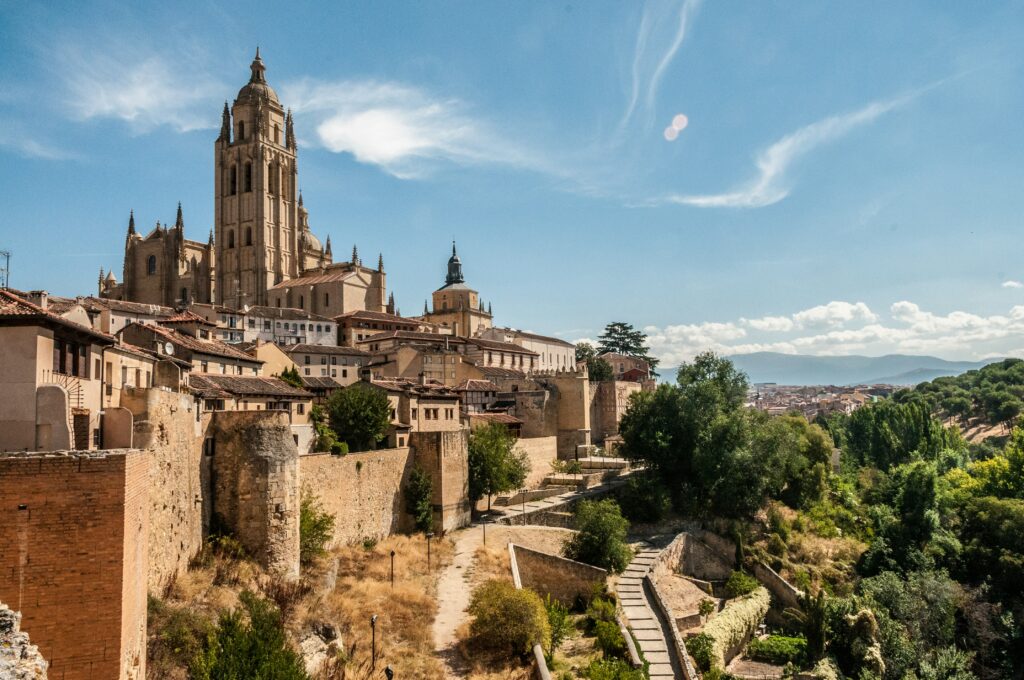
Segovia has two absolutely unmissable sights: the incredible Roman aqueduct that still dominates the town centre, and the Alcázar castle that supposedly inspired Disney’s Cinderella Castle. It’s a proper day out with some brilliant walking and fantastic food.
Getting to Segovia
There are slower regional trains taking around 1.5–2 hours and faster high-speed trains taking under 30 minutes, with return prices varying widely, so users should check Renfe for current schedules and fares. Alternatively, high-speed services to Segovia (AVE/Avlo/Alvia) depart from Madrid Chamartín-Clara Campoamor with journey times of roughly 27–30 minutes but cost significantly more and drop you at Segovia-Guiomar station, which is about 5km from the centre.
From Segovia-Guiomar you must take a bus or taxi (10–15 minutes) to the center. From the older central station “Segovia” (used by some Media Distancia trains), the walk to the aqueduct is around 1.5–2km and can take 20–30 minutes, mostly downhill. You’ll pass through some lovely residential areas and get a great sense of the town beyond the tourist centre.
The Aqueduct and Alcázar
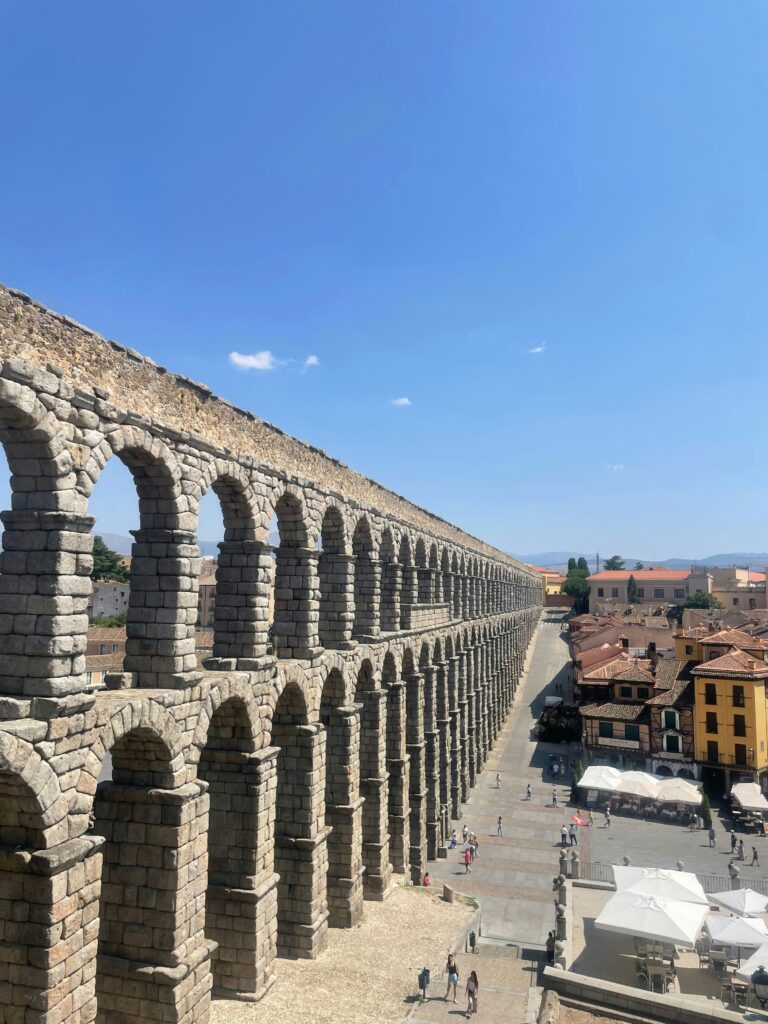
The Roman aqueduct is absolutely incredible – 167 arches stretching nearly 1km through the town centre, built without a single drop of mortar. It’s been carrying water from the mountains for nearly 2000 years, which is mind-boggling when you think about it.
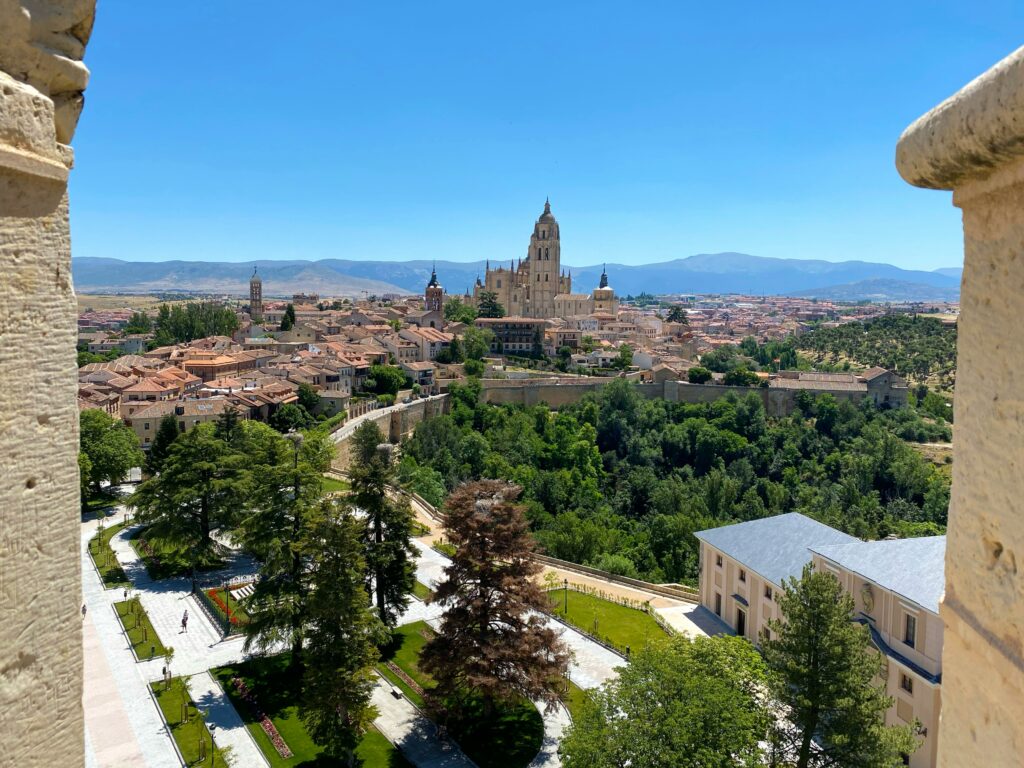
The Alcázar sits on a rocky crag at the confluence of two rivers and looks like something straight out of a fairy tale. The interior is worth exploring (€10 entry) for the armour collection and royal apartments, but the real highlight is climbing the Tower of Juan II for panoramic views across the Castilian plains.
Segovia’s also famous for cochinillo (roast suckling pig), so if you fancy a proper Spanish lunch, this is the place to try it. Restaurante José María is legendary among locals, though you’ll pay tourist prices.
Aranjuez: Royal Palace and Gardens
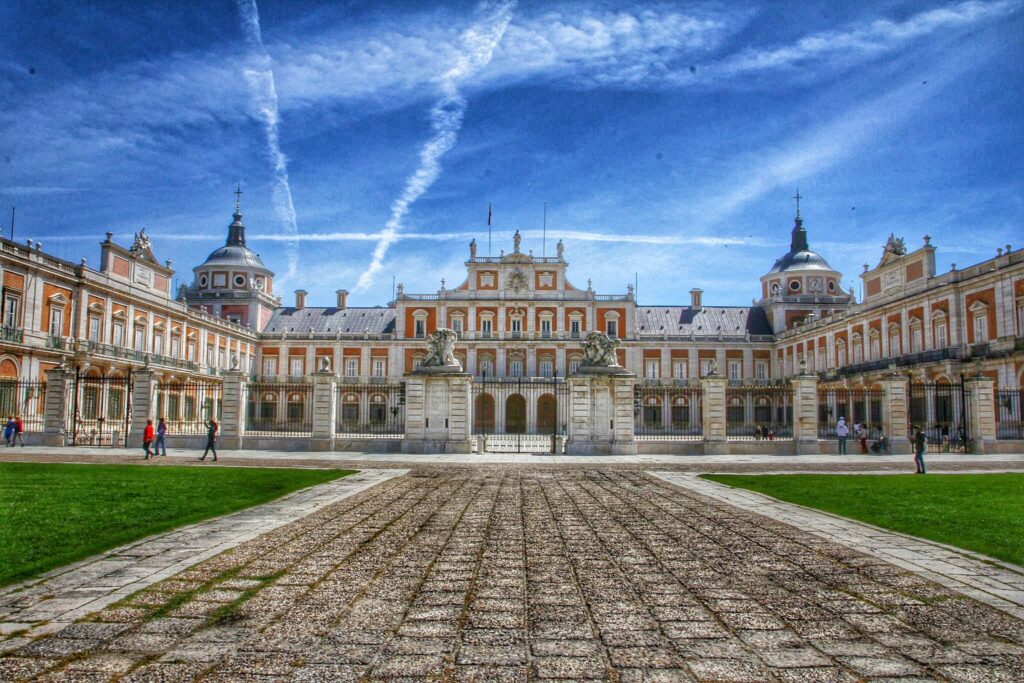
Aranjuez is perfect for a relaxing day trip, especially in spring and summer when the palace gardens are at their most beautiful. The Royal Palace itself is stunning, but it’s really all about wandering through the elaborate gardens and maybe taking a boat ride along the Tagus.
Getting to Aranjuez
Madrid–Aranjuez commuter service is typically operated by Cercanías lines (currently C3/C3a depending on service pattern), but frequency and fares should be checked live as exact times and prices can vary. The station is just a 5-minute walk from the palace entrance.
Palace and Gardens
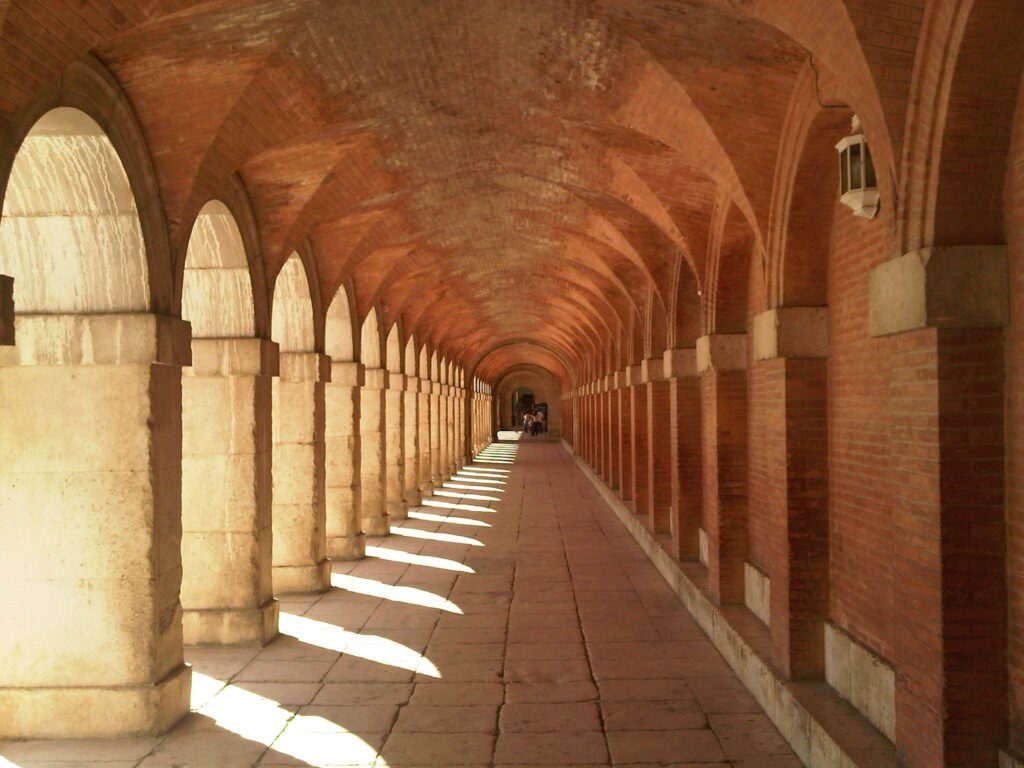
Adult entry is around €10–€15, and visitors should check Patrimonio Nacional for up-to-date combo options and prices. The palace interior is quite impressive – lavishly decorated rooms that show how the Spanish royalty lived during the 18th and 19th centuries.
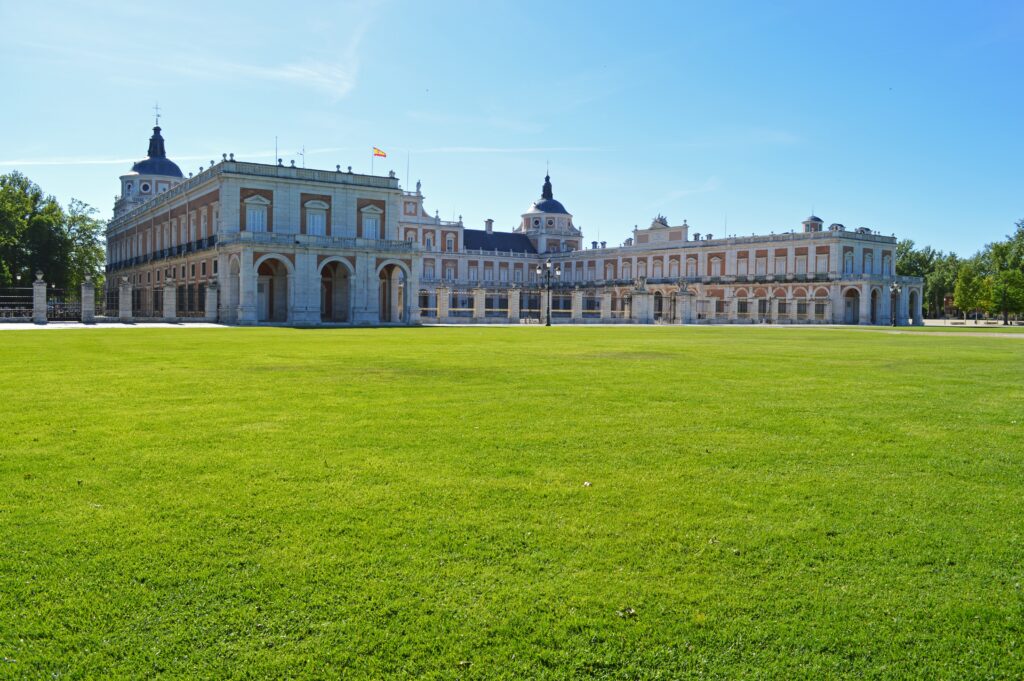
The gardens are the real highlight though. They’re enormous and include several distinct sections: the formal Parterre Garden, the romantic Island Garden, and the English-style Prince’s Garden. In spring and summer there are scheduled fountain shows on specific days and times, and visitors should check the current timetable locally or on official sites.
In the warmer months there are leisure boat trips on the Tagus, with schedules and prices varying by operator and season. It’s quite romantic and gives you a different perspective on the palace and surrounding countryside, though visitors should confirm current details before planning around them.
Cuenca: Hanging Houses and Dramatic Gorges
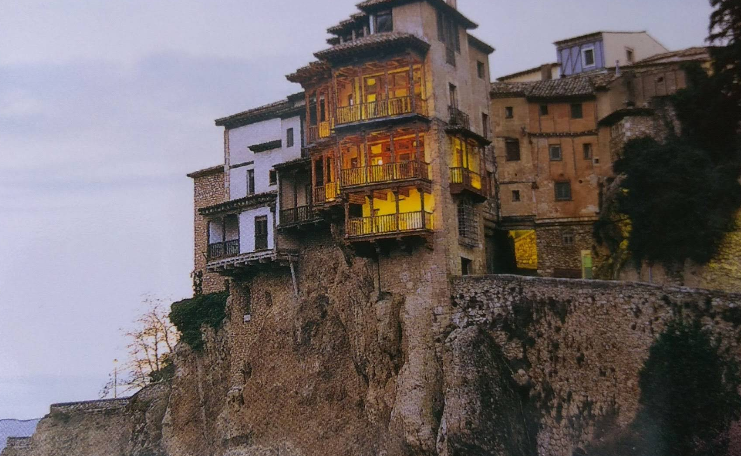
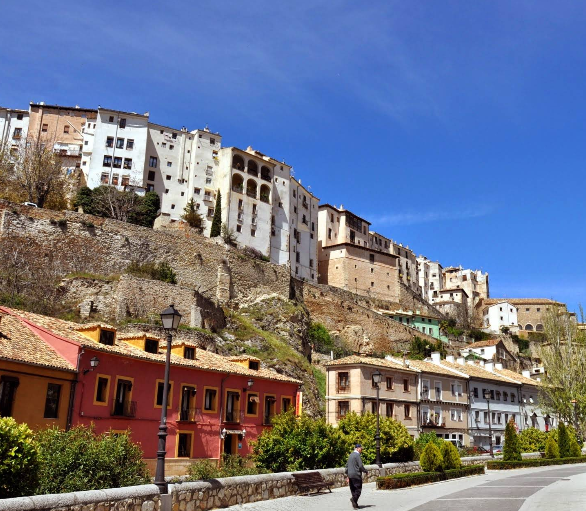
Cuenca is absolutely stunning – a medieval city perched on cliffs between two river gorges, famous for its “hanging houses” that literally dangle over the precipice. It’s about an hour away by high-speed train and feels like you’ve traveled to a completely different world.
Getting to Cuenca
The AVE high-speed train from Madrid Atocha takes just 55 minutes and costs around €25-40 depending on when you book. Trains run several times daily, and advance booking usually gets you better prices. The station is about 4km from the old town, but there’s a regular bus service.
The Hanging Houses and Old Town
The famous hanging houses (Casas Colgadas) are genuinely spectacular – medieval buildings that extend out over the Huécar gorge, supported by wooden beams. The best views are from the San Pablo bridge, especially in late afternoon when the limestone cliffs glow golden.
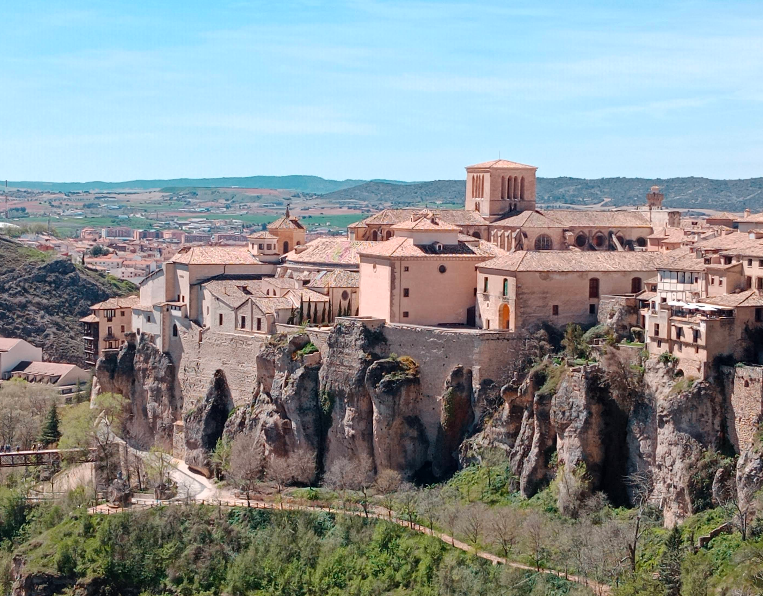
The Cathedral is worth visiting (€5.50 entry) for its unusual facade and the excellent views from the bell tower. The old town is perfect for wandering – narrow medieval streets, tiny squares, and loads of character.
If you fancy a special lunch, the Parador hotel has a restaurant with spectacular views of the hanging houses. A three-course meal costs around €25 and you’re paying as much for the location as the food, but it’s quite memorable.
Consuegra: Don Quixote’s Windmills
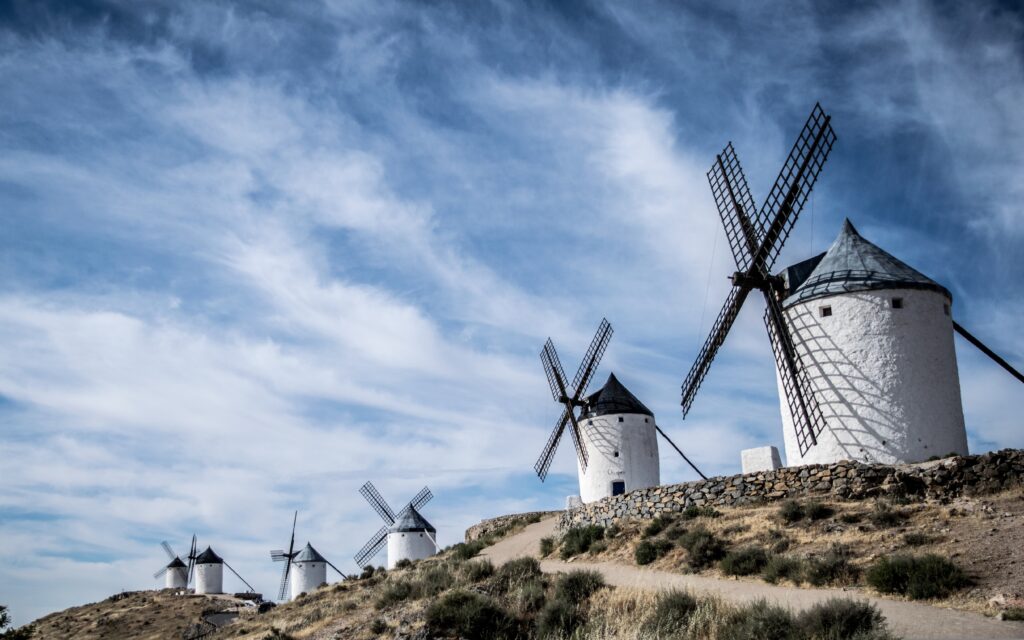
Consuegra has some of the most iconic windmills in Spain – the ones that supposedly inspired Cervantes when he wrote about Don Quixote tilting at windmills. The hilltop setting is dramatic, and if you time it right, the photography opportunities are incredible.
Getting to Consuegra
There’s no direct public transport from Madrid, so you’ll need to drive or join a tour. It’s about 1.5 hours by car via the A4 and CM-400. If you don’t have a car, several companies run day trips that combine Consuegra with Toledo.
The Windmills at Dawn
The best time for photography is definitely early morning – the windmills catch the first light beautifully, and you’ll have them mostly to yourself. The hill offers panoramic views across the La Mancha plains, and you can understand why Cervantes found inspiration in this landscape.
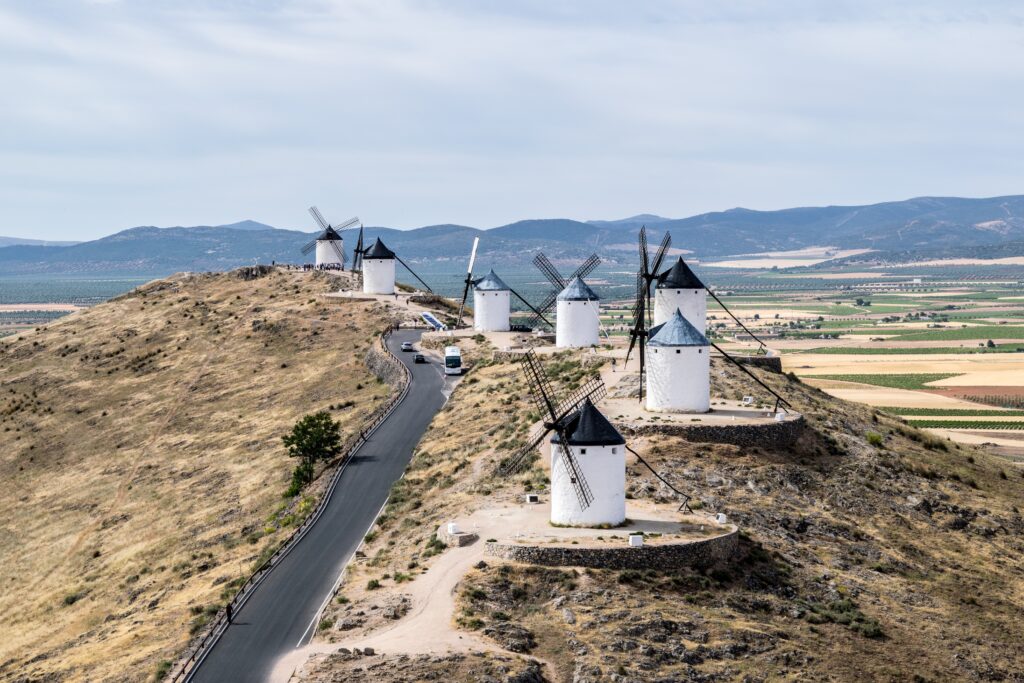
There are 12 windmills in total, and several have been restored to working condition. You can go inside a couple of them to see how they operated, which is quite interesting if you’ve never seen the mechanism before.
The castle was originally an Islamic fortress that was later controlled by the Order of Saint John (Knights Hospitaller) after the Battle of Las Navas de Tolosa in the early 13th century, and it offers great views of the windmills.
Practical Tips for Madrid Day Trips
Transport Planning: Book AVE tickets in advance through the Renfe app for better prices. Regional trains rarely sell out, so you can usually buy tickets on the day. Always validate bus tickets when boarding.
Timing: Start early to make the most of your day – many sites open at 9 or 10am. Tuesday through Thursday are generally less crowded than weekends.
Money: Most sites accept cards, but carry some cash for smaller restaurants and local transport. Many museums offer reduced prices for EU students and seniors.
Weather Considerations: Summer can be brutally hot, especially in Toledo and Consuegra. Spring (April-May) and autumn (September-October) offer the best weather for walking around historic sites.
Food: Pack snacks and water, especially for longer trips. Restaurant lunch service typically runs 1-4pm, so plan accordingly if you want a proper sit-down meal.
Return Journey: Check return transport times before you go out exploring – you don’t want to get stuck waiting for the last train or bus of the day.
Photography: Golden hour (just after sunrise or before sunset) offers the best light for photographing these historic sites, but factor in opening times and transport schedules.