
Some links below are affiliate links, that help keep this site running at no extra cost to you. Learn more here.
Córdoba absolutely captivated me the first time I visited, and I’ve been back several times since. This isn’t just another pretty Andalusian city – it’s where you can see Roman, Islamic, Christian, and Jewish history layered together in one incredibly compact historic centre that you can explore entirely on foot.
What makes Córdoba special is how it manages to feel both grand and intimate at the same time. The Mezquita-Catedral is genuinely one of the most extraordinary buildings in the world, yet you can also wander through tiny whitewashed lanes in the Jewish Quarter where time seems to have stood still. The city has a wonderful rhythm to it – bustling and energetic in the mornings and evenings, but deliciously quiet during the afternoon siesta when locals retreat from the heat.
Why visit Córdoba: layers of history in one compact city
Córdoba was one of the largest and most sophisticated cities in medieval Western Europe, and the intellectual capital of the Islamic world. In the 10th century, when London was a muddy collection of wooden buildings, Córdoba had a population that some sources estimate at around 500,000 inhabitants (though exact figures from this period are debated by historians and may be somewhat exaggerated), street lighting, running water, and dozens of libraries. That golden age left an incredible architectural legacy that you can still see today.
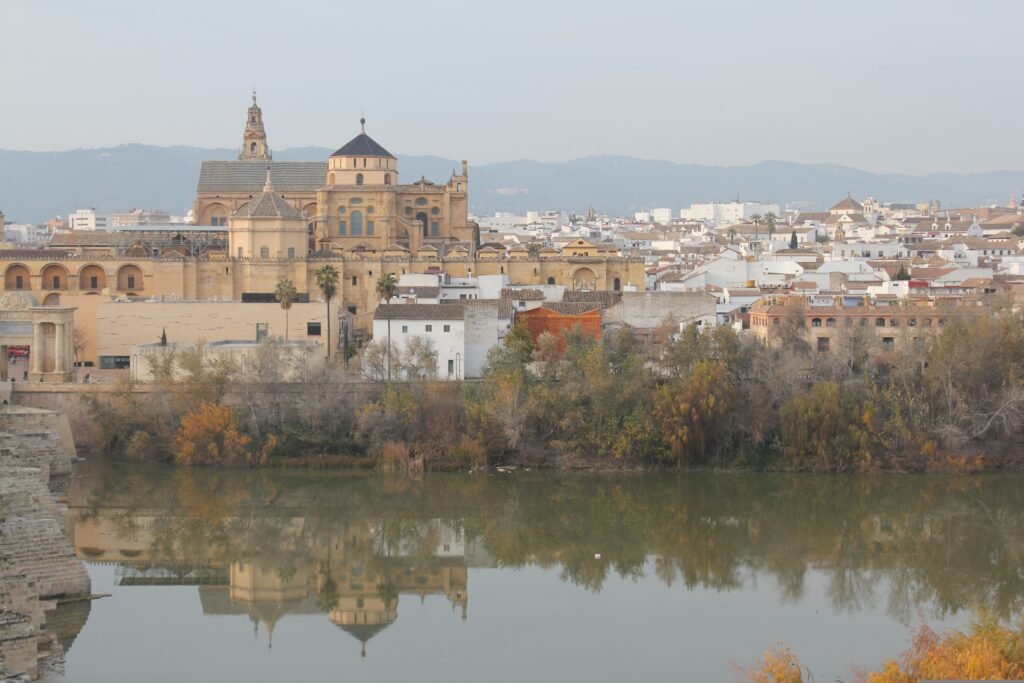
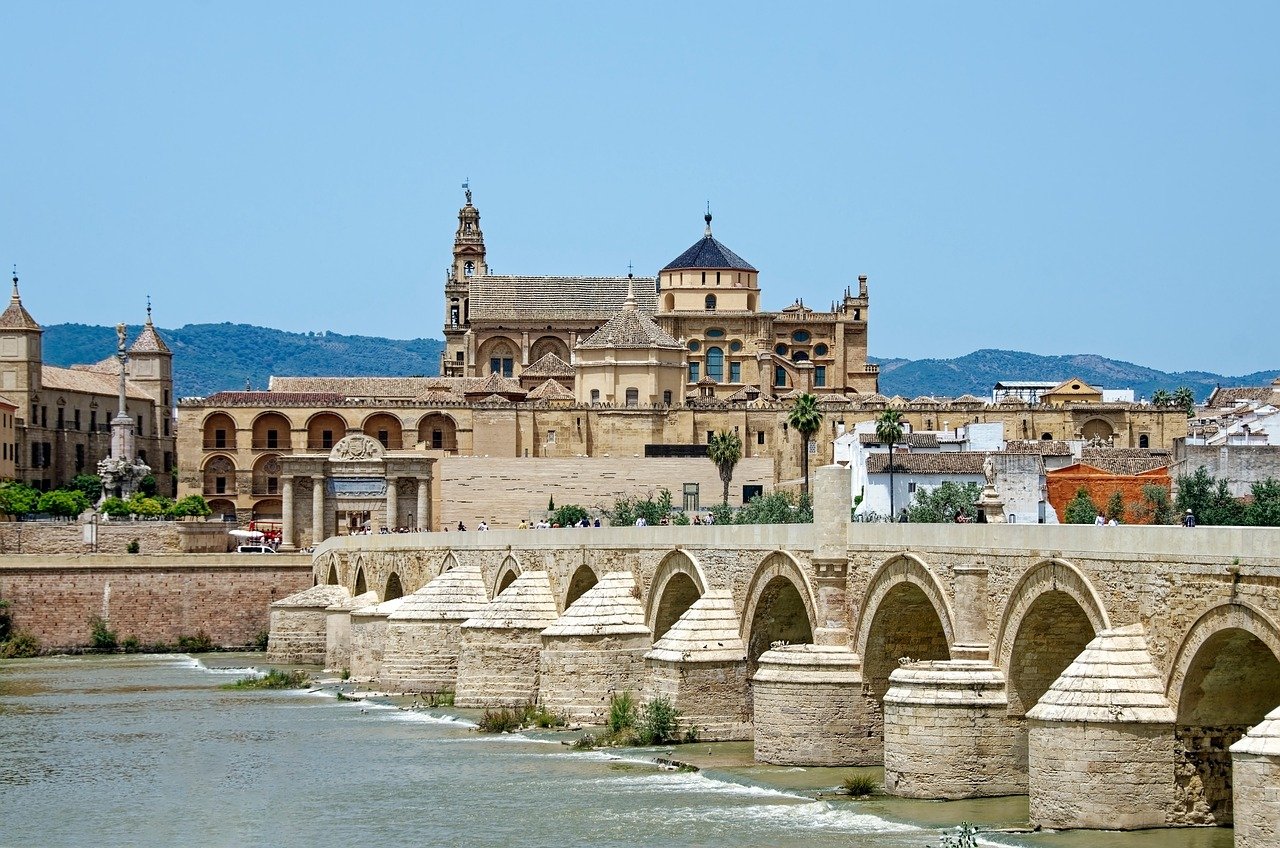
The city’s Roman heritage is everywhere – from the magnificent bridge that still carries pedestrians across the Guadalquivir River to the foundations beneath many buildings in the historic centre. Then came the Islamic period, which gave Córdoba its most famous monument and created the maze-like street pattern that makes wandering here such a joy.
After the Christian reconquest in 1236, instead of destroying the Great Mosque, they inserted a cathedral right into the middle of it. It sounds bizarre, but the result is absolutely fascinating – walking through the forest of columns and arches, then suddenly finding yourself in a Renaissance cathedral nave is quite extraordinary.
The Jewish Quarter (Judería) preserves another layer of history, with its narrow streets, flower-filled patios, and the beautiful synagogue that’s one of the very few surviving medieval synagogues in Spain. The Mudéjar influence – Christian architecture incorporating Islamic decorative elements – appears throughout the city in buildings that blend both traditions.
What I love is how all these layers exist together harmoniously. You’re not visiting separate historical sites – you’re walking through a living city where two millennia of history is woven into the fabric of everyday life.
How many days to spend in Córdoba
If you’re doing a whistle-stop Andalusia tour, you can see Córdoba’s main highlights in one long day, though it will be quite rushed. Many visitors come on day trips from Seville (which is about 45 minutes away by train) and manage to visit the Mezquita, walk around the Jewish Quarter, and have lunch before heading back.
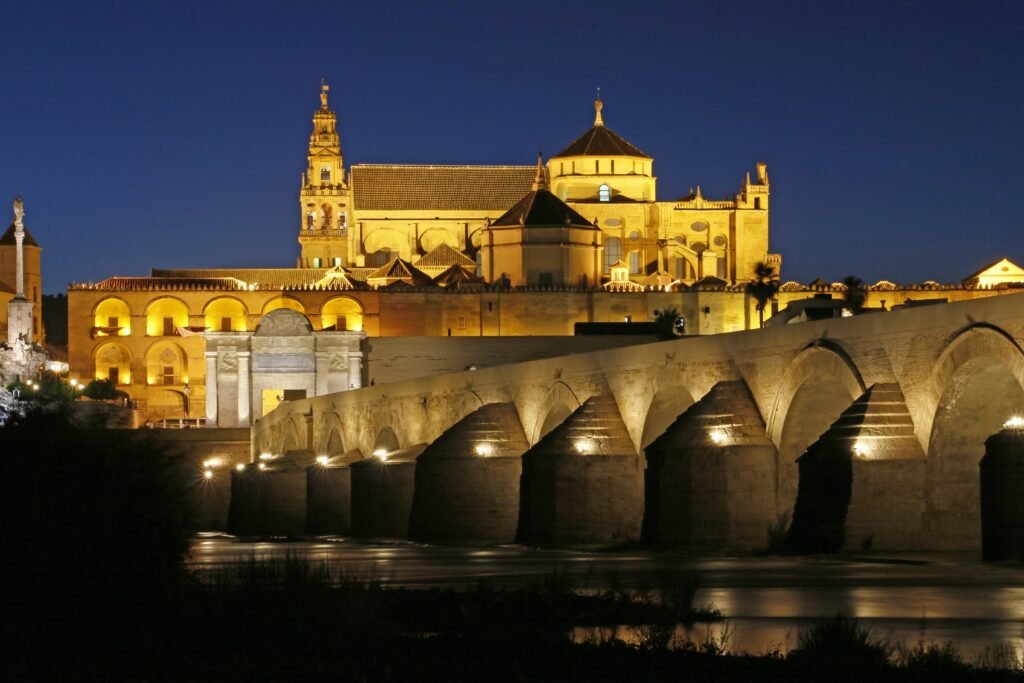
I’d honestly recommend spending at least two nights here if your schedule allows it. This gives you a full day to see the major monuments without rushing, plus time to enjoy Córdoba’s brilliant food scene and experience the city in the evening when it’s absolutely magical. You can also include a visit to Medina Azahara, the stunning ruins of a 10th-century palace city that’s about 8km outside town.
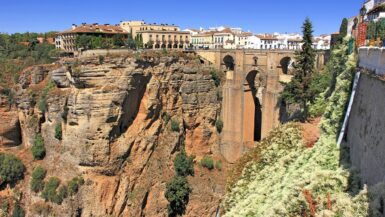
Three days is absolutely perfect if you want to really soak up Córdoba’s atmosphere. You’ll have time to visit all the monuments at a leisurely pace, explore the areas beyond the historic centre, take a day trip to the organic olive groves in the surrounding countryside, or even venture out to Ronda for a completely different perspective on Andalusian history and landscape.
The city works brilliantly as part of a wider Andalusia itinerary, being well-connected by train to Seville, Granada, and Málaga. Many people combine Córdoba with these cities for a week-long or two-week tour of southern Spain.
Best sights in Córdoba
Mezquita-Catedral
There are plenty of things to do in Cordoba, but there’s one reason people visit the city. That is the Mezquita Catedral, it’s genuinely one of the most extraordinary buildings I’ve seen anywhere in the world. The Great Mosque was begun in 785 AD and expanded several times over the following centuries until it became one of the largest mosques in the Islamic world.
Book your skip-the-line Mezquita-Cathedral guided tour from €32 per person
Walking into the prayer hall is quite overwhelming – you’re confronted by a forest of over 850 columns supporting distinctive striped arches in alternating red brick and white stone. The effect is hypnotic, creating an almost infinite sense of space that feels both architectural and spiritual.
Then you reach the centre and find a full Renaissance cathedral nave inserted right into the mosque. It’s jarring and fascinating in equal measure. Charles V, who authorised the cathedral’s construction in the 16th century, later regretted it, saying “You have destroyed something unique to build something commonplace.” Whether you agree with that assessment or not, the combination is certainly unique.
Don’t miss the original mihrab (prayer niche) which is absolutely stunning with its intricate mosaics and marble work. The courtyard (Patio de los Naranjos) with its orange trees and fountains is lovely for a quiet moment away from the crowds inside.
Roman Bridge and Torre de la Calahorra
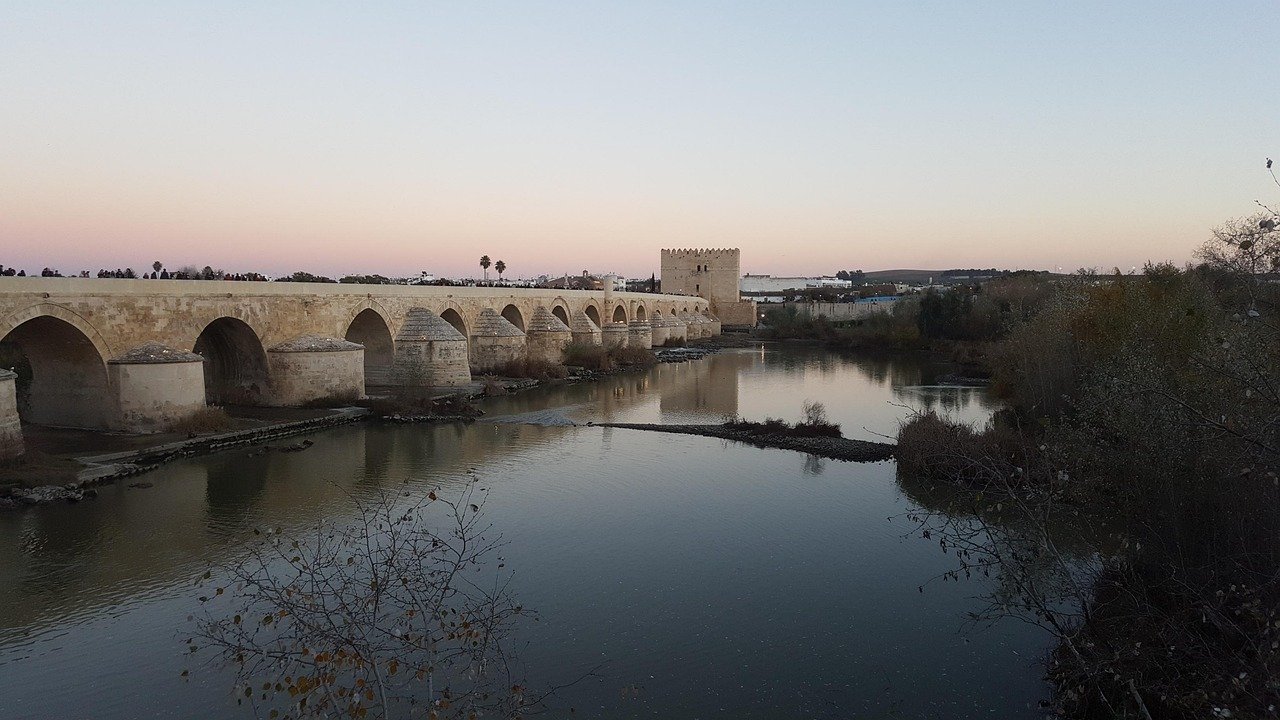
The Roman Bridge (Puente Romano) has been crossing the Guadalquivir River since the 1st century BC, though it’s been rebuilt and modified many times over the centuries. Walking across it gives you brilliant views back towards the Mezquita and the old city – particularly beautiful at sunset.
At the southern end of the bridge, the Torre de la Calahorra houses a small museum about Córdoba’s multicultural medieval period. It’s worth visiting if you’re interested in the history of how Christians, Muslims, and Jews coexisted in medieval Spain.
Alcázar de los Reyes Cristianos
The Alcázar (fortress-palace) was built by Christian kings in the 14th century on the ruins of earlier Moorish and Roman structures. The interior is interesting enough, with some lovely Roman mosaics and tapestries, but the real highlight is the gardens.
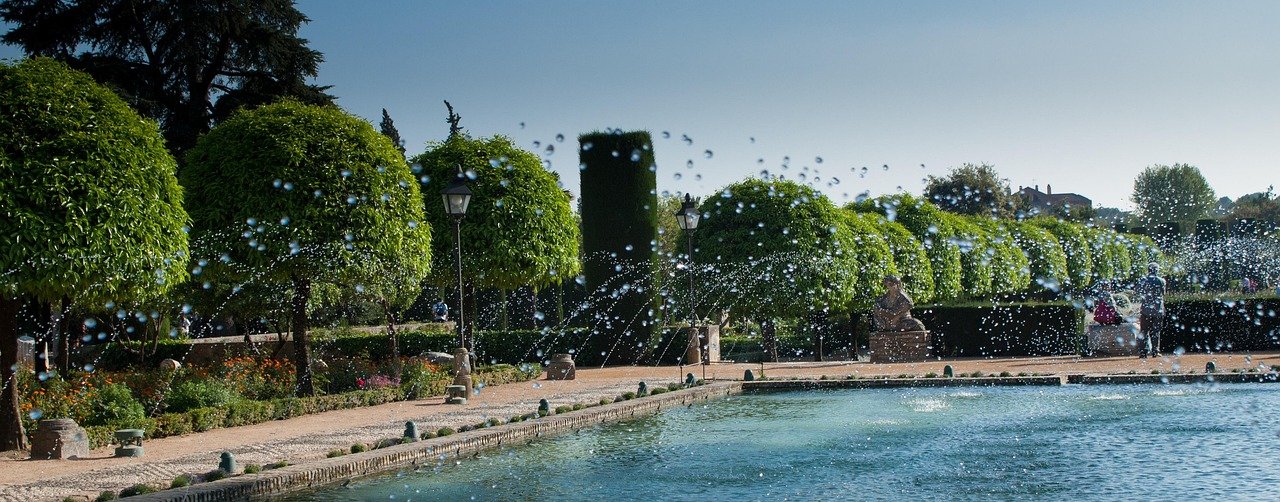
The terraced gardens are absolutely gorgeous, especially in spring when everything’s blooming. There are pools, fountains, orange trees, and brilliant views from the ramparts. On summer evenings, they sometimes hold outdoor concerts and shows in the gardens which are quite magical.
Jewish Quarter (Judería)
The network of narrow whitewashed streets around the synagogue forms Córdoba’s Jewish Quarter, and it’s an absolute joy to wander through. The lanes are deliberately narrow and winding to provide shade from the summer heat, and they’re lined with craft shops, tiny restaurants, and beautiful flower-filled patios.
The synagogue itself is small but exquisite, with delicate Mudéjar plasterwork covering the walls. It’s one of the very few surviving medieval synagogues in Spain, making it quite special. The Casa de Sefarad nearby provides excellent context about Sephardic Jewish culture and history.
Don’t miss Calleja de las Flores, a narrow alley that frames a perfect view of the Mezquita’s bell tower through an arch of geraniums. It’s terribly photogenic and consequently often crowded with photographers, but still worth seeking out.
Medina Azahara
About 8km west of Córdoba lie the ruins of Medina Azahara, a vast palace city built in the 10th century by the Umayyad caliph Abd ar-Rahman III. It was only used for about 70 years before being destroyed during civil wars, but what remains is absolutely fascinating.
The archaeological site gives you a real sense of the scale and sophistication of Islamic Córdoba at its peak. The restored sections show the incredible craftsmanship of the marble work, mosaics, and architectural details. There’s an excellent museum on site that explains the history and displays many of the finds from excavations.
Getting there is easiest by organised tour or taxi, though there is a bus from the city centre if you’re on a budget.
Best areas to stay in Córdoba
Judería (Jewish Quarter)
Staying in the Judería puts you right in the heart of the historic centre, literally steps from the Mezquita and all the main sights. The area is absolutely charming with its narrow streets and flower-filled patios, and you’ll find loads of restaurants and tapas bars within easy walking distance.
The downside is that it can be quite touristy and crowded during the day, and many hotels in this area are in historic buildings which means rooms can be small and layouts quirky. It’s also not ideal if you’re arriving by car as the streets are narrow and parking is complicated.
Centro (around Plaza de la Corredera)
Just north of the Judería, the area around Plaza de la Corredera has a more local feel while still being close to all the sights. The plaza itself is lovely – a rectangular arcaded square where locals gather for coffee and tapas.
This area tends to have slightly better value accommodation than the Judería, and you’ll find more restaurants catering to locals rather than tourists. It’s still completely walkable to all the main monuments in about 10-15 minutes.
Near the train station
If you’re only in Córdoba for a day trip or need easy access to the train station for onward travel, there are several decent hotels in this area. You’ll sacrifice some atmosphere compared to staying in the historic centre, but it’s more convenient and often cheaper.
The walk from the station to the old town is about 15-20 minutes and quite pleasant, or you can grab a taxi or bus.
Getting around Córdoba
The historic centre of Córdoba is gloriously compact and almost entirely pedestrianised, which makes walking the obvious choice for getting around. From the Mezquita to the furthest corners of the Judería is barely 15 minutes on foot, and half the joy of Córdoba is wandering its maze of narrow streets discovering hidden corners.
Cycling is brilliant for exploring beyond the immediate historic centre or reaching Medina Azahara. The city has been making serious efforts to improve cycling infrastructure, and there are several bike hire companies offering both regular and electric bikes.
Book your Córdoba bike tour from €29 per person
If you prefer electric assistance for tackling any hills or covering more ground with less effort, the e-bike option is brilliant:
Book your Dutch e-bike tour from €29 per person
Taxis are readily available if you need them, particularly useful for getting to Medina Azahara or the train station with luggage. The city also has a local bus network, though you probably won’t need it unless you’re staying quite far from the centre or visiting sites on the outskirts.
Suggested itineraries
One day in Córdoba
If you’ve only got one day, start early to beat the crowds and the heat. Head straight to the Mezquita first thing when it opens (currently 10am most days, though check ahead). Book a skip-the-line guided tour to make the most of your limited time and really understand what you’re seeing.
After the Mezquita, spend a couple of hours wandering the Jewish Quarter. Visit the synagogue, peek into the Casa de Sefarad, and definitely find Calleja de las Flores for that iconic photo. Stop for lunch at one of the traditional patios restaurants – the one at Palacio de Viana is particularly lovely.
In the afternoon, walk across the Roman Bridge for views back to the city, then either visit the Alcázar and its gardens or simply spend time getting pleasantly lost in the historic centre’s back streets. Finish your day with tapas and wine in one of the bars around Plaza de la Corredera, where you can watch local life unfold.
Two days in Córdoba
With two days, you can take a much more relaxed approach. Spend your first day on the itinerary above, but without rushing. Book an evening wine tasting to get to know the local Montilla-Moriles wines:
Book your local wine tasting evening from €25 per person
On your second day, visit Medina Azahara in the morning when it’s cooler. You could either hire a car, take a taxi, or join an organised tour. Allow at least 2-3 hours including travel time.
Return to Córdoba for a late lunch, then spend the afternoon exploring areas you missed on day one – perhaps visit the Palacio de Viana with its dozen beautiful patios, or cross to the southern side of the river for different perspectives on the old town. In the evening, join a tapas and flamenco tour for an authentic taste of Córdoban culture:
Book your tapas bars, wine and flamenco tour from €95 per person
Three days in Córdoba
Three days gives you time to really get under the skin of the city. Follow the two-day itinerary above, then on day three either take a day trip to somewhere completely different like Ronda:
Book your full-day Ronda trip from €200 per person
Or stay closer to Córdoba and explore the surrounding countryside with a visit to a family-run organic olive grove:
Book your olive grove visit and tasting from €39 per person
Alternatively, use your third day to explore Córdoba’s less-visited sights like the Archaeological Museum, wander through the Tendillas district for some shopping, or simply enjoy a leisurely morning at a café watching the world go by.
Best bookable experiences in Córdoba
Here’s a quick comparison of the top activities you can book in Córdoba to help you plan your trip:
| Tour | Duration | Price | Best for | Book |
|---|---|---|---|---|
| Skip-the-line Mezquita-Cathedral tour | 75-90 mins | €32 | First-time visitors who want expert context | Book now |
| Bike tour (regular or e-bike) | 2 hours | €29 | Active travellers wanting to cover more ground | Book now |
| Tapas bars, wine and flamenco | 4 hours | €95 | Food lovers and culture seekers | Book now |
| Local wine tasting evening | 1 hour | €25 | Wine enthusiasts on a budget | Book now |
| Full Córdoba tasting | 90 mins | €35 | Foodies wanting to sample local specialties | Book now |
| Olive grove visit and tasting | 2 hours | €39 | Anyone interested in authentic farm experiences | Book now |
| Full-day Ronda trip | Full day | €200 | Adventurous visitors with extra time | Book now |
If you’re interested in diving deep into Córdoba’s incredible food scene, definitely consider the comprehensive tasting experience:
Book your full Córdoba tasting from €35 per person
Best time to visit: patios season, summer heat, and quieter winter trips
Córdoba has quite extreme weather, and choosing when to visit can significantly affect your experience. The city gets absolutely scorching in summer – temperatures regularly exceed 40°C (104°F) in July and August, making sightseeing genuinely uncomfortable during the middle of the day.
Patios Festival in May is absolutely spectacular if you can time your visit right. Córdobans open their private courtyards to the public, and the whole city becomes an explosion of geraniums, carnations, and jasmine. The flowers cascade from wrought-iron balconies and cover every available surface – it’s genuinely breathtaking. The festival usually takes place in early-to-mid May, though exact dates vary each year; for 2026, published listings show 22–31 May. Book accommodation well in advance if you’re planning to visit during this period as the city gets absolutely packed.
Spring (April-May) and autumn (September-October) are ideal for general sightseeing. Temperatures are comfortable for walking around all day, the light is beautiful for photography, and you’ll avoid the intense summer heat. These periods can still be busy with tourists, but nothing compared to peak summer.
Summer (June-August) is the local holiday season, so you’ll find many Córdobans have left for the coast and some restaurants close for weeks at a time. If you do visit in summer, adopt the Spanish schedule – get up early to visit monuments when they open, retreat to air-conditioned spaces during the afternoon heat, then emerge again in the evening when temperatures drop. The city comes alive after 9pm with people strolling, dining, and socialising in the pleasant evening air.
Winter (November-February) is surprisingly lovely if you don’t mind cooler temperatures. The city is much quieter, you’ll get better hotel rates, and there’s something quite atmospheric about wandering through the historic centre on a crisp winter morning. Temperatures rarely drop below freezing, though you’ll want warm layers for evenings. Many monuments have reduced opening hours in winter, so check ahead.
Practical information for visiting Córdoba
Money and tickets
Most major monuments in Córdoba charge admission fees. Ticket prices can vary, so I’d recommend checking the official websites before your visit for the most current pricing. The Mezquita-Catedral, Alcázar de los Reyes Cristianos, and the Synagogue all charge admission, though there are sometimes free entry periods or reduced rates for EU citizens, students, and seniors – it’s worth checking what discounts might apply to you.
I’d recommend booking skip-the-line tickets for the Mezquita in advance, especially if you’re visiting during busy periods. The queues can be quite long, and you really don’t want to waste precious sightseeing time standing in line in the heat.
There are various combination tickets available if you’re planning to visit multiple monuments, which can save you money. The tourist office has details of current offers.
Most restaurants and shops accept cards, but it’s worth carrying some cash for smaller establishments, tapas bars, and market stalls.
Opening hours
Spanish opening hours can be confusing if you’re not used to them. Most monuments open around 9-10am and close for siesta roughly 2-5pm, then reopen until 7-8pm. Shops typically follow a similar pattern, though larger chain stores often stay open throughout the day.
Restaurants generally don’t start serving lunch until about 1:30pm, with dinner not beginning until 9pm at the earliest. If you’re starving at 6pm, you’re in the gap between lunch and dinner when most restaurants are closed – head to a café or tapas bar instead where you can usually get something to eat.
Many monuments have reduced hours or close entirely on Mondays, so plan accordingly. Opening hours also change seasonally, with summer hours often extended to allow visits during cooler morning and evening periods.
What to bring
Sun protection is absolutely essential, particularly if visiting between May and September. A good sun hat, high-factor sunscreen, and sunglasses are not optional – the Andalusian sun is seriously strong. I’ve seen too many tourists turn lobster-red from underestimating it.
Comfortable walking shoes with good grip are important as you’ll be doing loads of walking, often on cobblestones which can be slippery. The narrow streets of the Judería have smooth, worn stone paving that gets quite slick when wet.
Modest clothing is required for visiting the Mezquita – shoulders and knees should be covered. It’s a working place of worship as well as a tourist attraction, so respectful dress is expected. In summer, bring a light scarf or wrap that you can throw over shorts or a sleeveless top.
A refillable water bottle is brilliant as there are drinking fountains around the city where you can fill up for free. Staying hydrated is crucial, especially in summer.
Where to park
If you’re driving to Córdoba, don’t even think about trying to park in the old town – the streets are narrow, many are pedestrianised, and parking is either impossible or extremely complicated. There are several car parks on the edges of the historic centre where you can leave your car for the duration of your stay:
- Parking Mezquita-Alcázar is closest to the main sights but fills up quickly
- Parking Victoria is slightly further out but larger and often has space
- Street parking is possible in some residential areas beyond the historic centre, but check signs carefully for restrictions
If you’re staying in a hotel in the old town, contact them in advance about parking arrangements – many have agreements with nearby car parks or can advise on the best options.
Honestly, if you’re visiting Córdoba as part of a wider Andalusia trip, I’d recommend using trains rather than driving between cities. The train connections are excellent, and you completely avoid the stress and expense of parking.
Getting to Córdoba
Córdoba is brilliantly connected by high-speed AVE trains to the rest of Spain. From Madrid it’s about 1 hour 45 minutes, from Seville about 45 minutes, and from Málaga approximately 1 hour 15 minutes to 1 hour 30 minutes depending on the service. The train station (Córdoba Central) is about a 20-minute walk from the historic centre, or you can grab a taxi or bus.
The nearest airport is Seville (about 2 hours by bus or car), though Málaga airport is also an option and might have better international connections depending on where you’re flying from.
Córdoba makes an excellent base for exploring this part of Andalusia, with easy day trips possible to Granada, Seville, and the surrounding countryside. Whether you’re here for one day or several, I’m confident you’ll fall in love with this remarkable city just as I did.