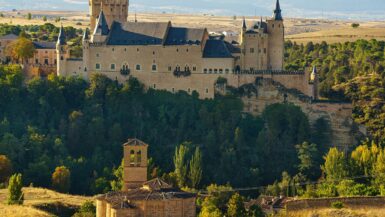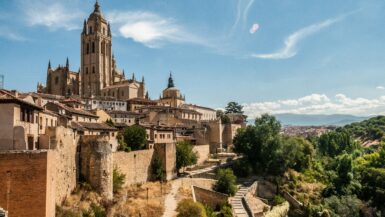

If you’re planning a trip to Spain and want to experience one of the country’s most beautiful and historic cities, Salamanca should definitely be on your list. This stunning university city in western Spain is famous for its golden sandstone buildings, world-renowned university, and incredible architecture that glows magnificently in the evening light.
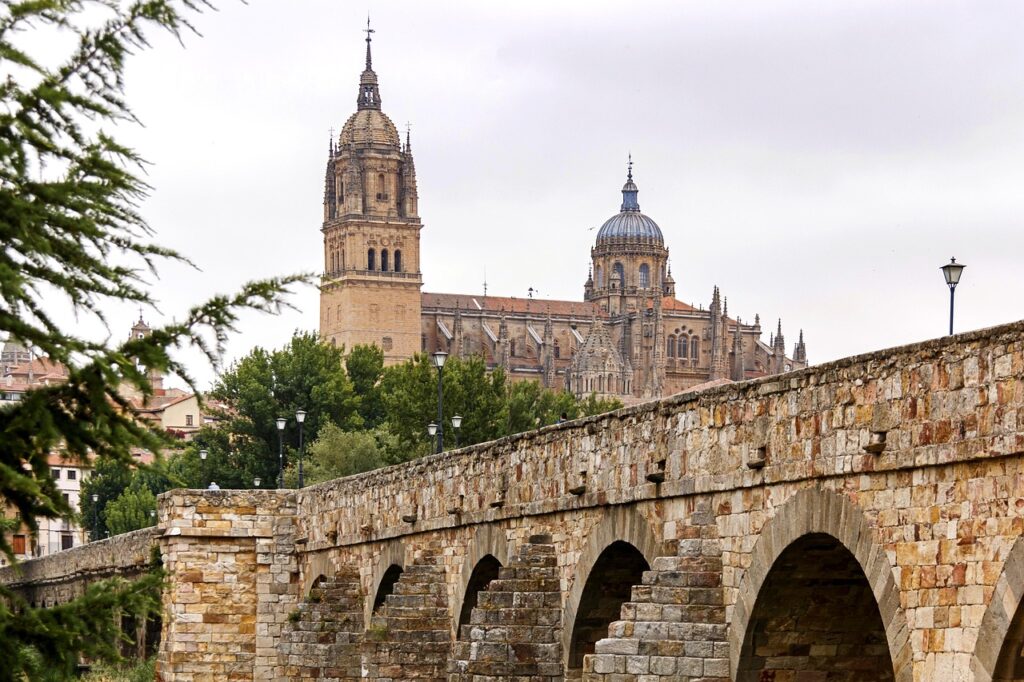
I’ve put together this guide to help you make the most of your time in Salamanca, covering everything from the must-see monuments to the best places to eat and where to stay. You’ll discover why this UNESCO World Heritage city has been captivating visitors for centuries with its mix of Roman, Gothic, Renaissance, and Baroque architecture.
Where is Salamanca?
Salamanca sits about 200 kilometres northwest of Madrid, making it easily accessible for a day trip or longer stay. The fastest way to get there is by train from Madrid’s Chamartín station, which takes between 1.5 and 2.5 hours on the Alvia or Media Distancia services.
If you’re driving, the A-6 motorway connects Madrid directly to Salamanca in about 2 hours. There are also regular bus services from Madrid and other major Spanish cities, though these take a bit longer than the train.
The city has a small airport, but it only handles domestic flights and charter services, so most international visitors will arrive via Madrid.
Plaza Mayor – the heart of Salamanca
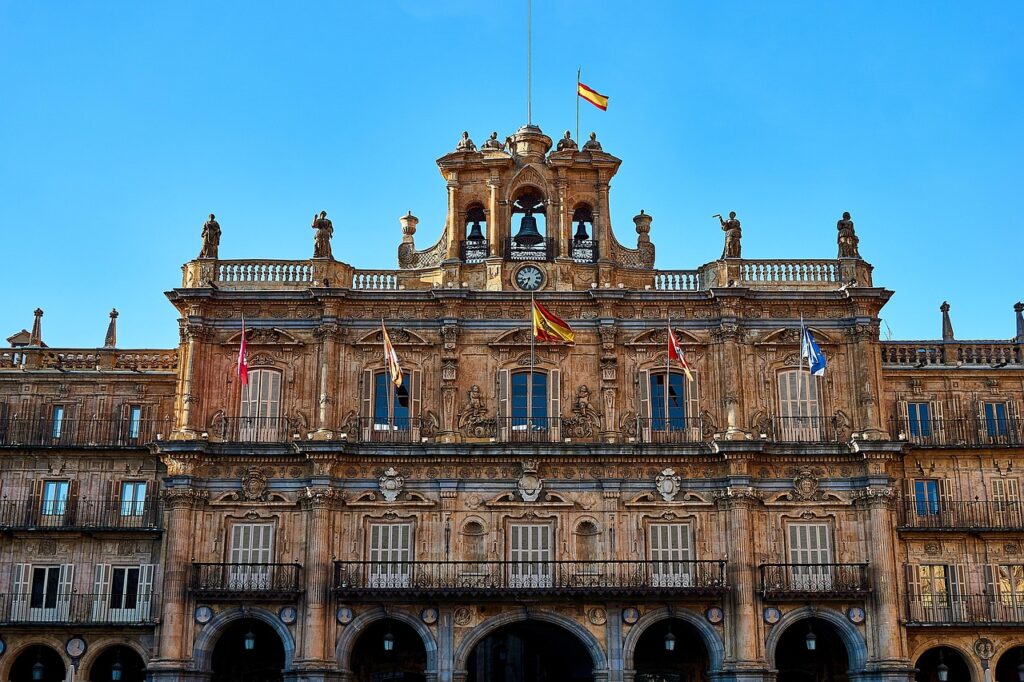
You absolutely have to start your visit at Plaza Mayor, which is widely considered one of Spain’s most beautiful main squares. Built in the 18th century from golden sandstone, the square transforms throughout the day as the light changes, but it’s particularly magical at sunset when the buildings seem to glow from within.
The square is perfectly symmetrical with 88 arched openings around the perimeter, each decorated with medallions featuring famous Spanish figures. You’ll spot everyone from Christopher Columbus to various historical personalities, though some of the medallions have been changed over the years for political reasons.
The best time to visit is in the evening when locals come out for their paseo (evening stroll) and the outdoor cafés fill up with people enjoying drinks and tapas. I’d recommend grabbing a table at one of the terrace cafés – yes, it’s touristy, but the atmosphere is fantastic and you’ll get brilliant people-watching opportunities.
University of Salamanca
Founded in 1218, the University of Salamanca is one of Europe’s oldest universities and still one of Spain’s most prestigious. The main building, known as the Escuelas Mayores, features one of the most famous facades in Spanish Renaissance architecture.
Opening hours: Monday to Saturday 10am-2pm and 4pm-8pm, Sunday 10am-2pm
Entry fee: Around €10 for adults
The famous “frog on a skull” carving is hidden somewhere on the ornate facade – finding it is supposed to bring good luck to students taking exams. I won’t spoil the fun by telling you exactly where it is, but look carefully around the central medallion and you’ll spot it eventually! Inside, you can visit the old lecture halls where famous scholars once taught, including the beautiful library with its ancient manuscripts and the historic classroom where Fray Luis de León famously resumed his lectures after being imprisoned by the Inquisition.
Salamanca’s two cathedrals
Salamanca has not one but two cathedrals sitting side by side, which makes for quite an impressive sight. The Old Cathedral dates from the 12th century and represents beautiful Romanesque architecture, while the New Cathedral was built in the 16th century in Gothic and Renaissance styles.
Old Cathedral (Catedral Vieja)
The older cathedral is smaller but more intimate, with a stunning early 15th-century altarpiece by Nicolás Florentino. The Romanesque dome, known as the Torre del Gallo (Rooster Tower), is particularly striking from the outside.
New Cathedral (Catedral Nueva)
The New Cathedral is much grander and took over 200 years to complete. The west facade is absolutely incredible – it’s covered in intricate carvings depicting religious scenes, and if you look carefully, you’ll spot some rather unusual modern additions including an astronaut and a dragon eating ice cream, added during 20th-century restoration work.
Opening hours: Daily 10am-6pm (extended hours in summer) Entry fee: Around €6 for both cathedrals You can climb the bell tower for spectacular views over Salamanca’s rooftops – it’s quite a climb but absolutely worth it for the panoramic views of the city and surrounding countryside.
Casa de las Conchas
This palace, built from the late 15th to early 16th century, gets its name from the more than 300 shell carvings decorating its exterior facade. Built by a knight of the Order of Santiago (whose symbol is the shell), it’s one of Salamanca’s most photographed buildings.
The building now houses a public library, so you can actually go inside to see the beautiful Renaissance courtyard. The contrast between the ornate exterior and the peaceful interior courtyard is quite striking. Opening hours: Monday to Friday 9am-9pm, Saturday 9am-2pm and 4pm-7pm, Sunday 4pm-7pm
Entry: Free Legend says that coins were hidden behind some of the shells, though I’m not sure I’d recommend trying to find them!
Art Nouveau and Art Deco Museum
Housed in the Casa Lis, this museum contains one of the best collections of decorative arts from the late 19th and early 20th centuries in Spain. The building itself is worth seeing – it’s an attractive example of modernist architecture with beautiful stained glass windows.
The collection includes everything from Tiffany lamps to Art Deco jewellery, porcelain, and furniture. Even if you’re not usually interested in decorative arts, the setting makes it worth a visit. Opening hours: Tuesday to Friday 11am-2pm and 4pm-7pm, weekends 11am-8pm Entry fee: Around €4
Where to eat in Salamanca
Salamanca has a fantastic food scene that goes well beyond the typical tourist restaurants around Plaza Mayor. Mesón Cervantes is a traditional tavern that’s been serving locals since 1897. It’s famous for its roast lamb and has barely changed over the decades – the walls are covered with bullfighting memorabilia and old photographs. You’ll find it packed with locals, which is always a good sign.
El Pecado offers a more modern take on Castilian cuisine. Their tasting menu is excellent, featuring local ingredients prepared with contemporary techniques. It’s pricier than the traditional places but worth it for a special meal.
For tapas, head to Van Dyck, which has an amazing selection of pinchos (small plates) displayed along the bar. You just grab a plate and help yourself – they count your toothpicks at the end to calculate your bill. Don’t miss trying hornazo, Salamanca’s traditional Easter pastry filled with hard-boiled eggs, chorizo, and ham. You can find it year-round at local bakeries, and it makes a perfect picnic lunch.
Best areas to stay in Salamanca
The historic centre is where you’ll want to base yourself, ideally within walking distance of Plaza Mayor. The area around the cathedral and university is perfect – you’ll be in the heart of everything but away from the busiest tourist streets. Hotel Rector is a boutique hotel in a restored 19th-century mansion, just a few minutes’ walk from Plaza Mayor. The rooms are elegant and the location is perfect for exploring on foot.
NH Collection Salamanca Palacio de Castellanos occupies a beautiful 15th-century palace and offers luxury accommodation with modern amenities in a historic setting. For budget travellers, Pensión Los Ángeles offers basic but clean rooms right in the city centre at very reasonable prices.
Day trips from Salamanca
Ciudad Rodrigo
This fortified town sits about 86 kilometres southwest of Salamanca, near the Portuguese border. The medieval walls are incredibly well-preserved, and you can walk almost the entire perimeter for fantastic views of the surrounding countryside.
The cathedral here is much smaller than Salamanca’s but equally beautiful, and the town has a lovely, sleepy atmosphere that’s perfect for a relaxed afternoon.
Alba de Tormes
Just 20 kilometres from Salamanca, this small town is famous as the place where Saint Teresa of Ávila died. The Carmelite convent contains her tomb and various relics, making it an important pilgrimage site.
The town also has a beautiful castle and some excellent restaurants serving traditional Castilian cuisine.
Practical tips for visiting Salamanca
The historic centre is quite compact and easily walkable, though the cobblestone streets can be a bit uneven. Comfortable walking shoes are essential. Parking in the city centre can be challenging, so if you’re driving, look for one of the car parks on the edge of the historic area and walk in.
Many shops and restaurants close for siesta between 2pm and 5pm, so plan accordingly. Dinner is typically eaten late – most restaurants don’t open until 8:30pm or 9pm.
The city gets quite busy with Spanish university students, particularly during term time, which adds to the lively atmosphere but can make restaurants busier in the evenings.
When to visit Salamanca
Spring (April to June) and autumn (September to November) offer the best weather for walking around and sightseeing. Summer can get quite hot, though the evenings are pleasant for dining outdoors. Winter is mild but can be rainy, though you’ll find fewer crowds and lower accommodation prices. The golden buildings look particularly striking against grey winter skies.
If you’re interested in student life, visit during term time (October to May) when the city buzzes with young energy. During summer holidays, it’s quieter but still charming.
The city comes alive in the evening when the buildings are illuminated, so make sure to take an evening stroll through the historic centre – it’s when Salamanca truly shows off its golden beauty.